Friday, October 26, 2012

Extraordinary Rendition Blog Tour and Excerpt

Extraordinary Rendition by Paul Batista


I am looking forward to reading Extraordinary Rendition in the very near future, however, since I wasn't able to read it in time for the blog tour, I am going to post a small excerpt from this exciting new thriller as well as the press release. I am delighted to provide a brief glimpse at this story and I am anxious to read the rest of it. I hope it interests others as well. There are links to online purchase options at the end of my post. 

                                    ~~~~~~~~


Thriller Examines Extraordinary Rendition
Action Pinpoints Issues in Constitutional Controversy


“Batista does it again when international intrigue collides with murder in Extraordinary Rendition! A high -priced Wall Street lawyer gets the shock of a lifetime...  law school never prepared him for this!  It's a fast ride--buckle up!"

--Nancy Grace, Attorney, TV Personality and NY Times Bestselling Author of Death on the D-List


When Ali Hussein—suspected terrorist and alleged banker for Al Qaeda—is finally transported from Gitmo to the US mainland to stand trial, many are stunned when Byron Carlos Johnson, pre-eminent lawyer and the son of a high-profile diplomat, volunteers as counsel.  On principle, Johnson thought he was merely defending a man unjustly captured through Rendition and water-boarded illegally. But Johnson soon learns that there is much more at stake than one man’s civil rights.

Hussein’s intimate knowledge of key financial transactions could lead to the capture of—or the unabated funding of—the world’s most dangerous terror cells. This makes Hussein the target of corrupt US intelligence forces on one side, and ruthless international terrorists on the other.  And, it puts Byron Carlos Johnson squarely in the crosshairs of both.

Pulled irresistibly by forces he can and cannot see, Johnson enters a lethal maze of espionage, manipulation, legal traps and murder. And when his life, his love, and his acclaimed principles are on the line, Johnson may have one gambit left that can save them all; a play that even his confidants could not have anticipated. He must become the hunter among hunters in the deadliest game.

Written by no-holds-barred-attorney Paul Batista, Extraordinary Rendition excels not only as an action thriller, but as a sophisticated legal procedural as well; tearing the curtains away from the nation’s most controversial issues.

Provocative. Smart. Heart-pounding. A legal thriller of the highest order.
###


AN EXCERPT FROM
CHAPTER 1
OF
EXTRAORDINARY RENDITION
BY
PAUL BATISTA

When the guard left, the iron door resonated briefly as the magnetic lock engaged itself. Byron sat in a steel folding chair. Directly in front of him was a narrow ledge under a multi-layered, almost opaque plastic window, in the middle of which was a metal circle.
Ali Hussein seemed to just materialize in the small space behind the partition. Dressed in a yellow jumpsuit printed with the initials “FDC” for “Federal Detention Center,” Hussein, who had been described to Byron as an accountant trained at Seton Hall, in Newark, was a slender man who appeared far more mild-mannered than Byron expected. He wore cloth slippers with no shoelaces. The waistband of his jump suit was elasticized—not even a cloth belt. He had as little access to hard objects as possible.
He waited for Byron to speak first. Leaning toward the metal speaker in the partition and raising his voice, Byron said, “You are Mr. Hussein, aren’t you?”
The lawyers at the Civil Liberties Union who had first contacted Byron told him that, in their limited experience with accused terrorists, it sometimes wasn’t clear what their real names were. There were often no fingerprints or DNA samples that could confirm their identities. The name Ali Hussein was as common as a coin. It was as though genetic markers and their histories began only at the moment of their arrest.
“I am.” He spoke perfect, unaccented English. “I don’t know what your name is.”
The circular speaker in the window, although it created a tinny sound, worked well. Byron lowered his voice. “I’m Byron Johnson. I’m a lawyer from New York. I met your brother. Did he tell you to expect me?”
“I haven’t heard from my brother in years. He has no idea how to reach me, I can’t reach him.”
“Has anyone told you why you’re here?”
“Someone on the airplane—I don’t know who he was, I was blind-folded—said I was being brought here because I’d been charged with a crime. He said I could have a lawyer. Are you that lawyer?”
“I am. If you want me, and if I want to do this.”
All that Ali’s more abrasive, more aggressive brother had told Byron was that Ali was born in Syria, moved as a child with his family to Lebanon during the civil war in the 1980s, and then came to the United States. Ali never became a United States citizen. Five months after the invasion of Iraq, he traveled to Germany to do freelance accounting work for an American corporation for what was scheduled to be a ten-day visit. While Ali was in Germany, his brother said, he had simply disappeared, as if waved out of existence. His family had written repeatedly to the State Department, the CIA, and the local congressman. They were letters sent into a vacuum. Nobody ever answered.
Byron asked, “Do you know where you’ve come from?”
“How do I know who you are?”
Byron began to reach for his wallet, where he stored his business cards. He caught himself because of the absurdity of that: he could have any number of fake business cards. Engraved with gold lettering, his real business card had his name and the name of his law firm, one of the oldest and largest in the country. Ali Hussein was obviously too intelligent, too alert, and too suspicious to be convinced by a name on a business card or a license or a credit card.
“I don’t have any way of proving who I am. I can just tell you that I’m Byron Johnson, I’ve been a lawyer for years, I live in New York, and I was asked by your brother and others to represent you.”
Almost unblinking, Ali just stared at Byron, who tried to hold his gaze, but failed.
At last Ali asked, “And you want to know what’s happened to me?”
“We can start there. I’m only allowed thirty minutes to visit you this week. Tell me what you feel you want to tell me, or can tell me. And then we’ll see where we go. You don’t have to tell me everything about who you are, what you did before you were arrested, who you know in the outside world. Or you don’t have to tell me anything. I want nothing from you other than to help you.”
Ali leaned close to the metallic hole in the smoky window. The skin around his eyes was far darker than the rest of his face, almost as if he wore a Zorro-style mask. Byron took no notes, because to do so might make Ali Hussein even more mistrustful.
“Today don’t ask me any questions. People have asked me lots of questions over the years. I’m sick of questions.” It was like listening to a voice from a world other than the one in which Byron lived. There was nothing angry or abusive in his tone: just a matter-of-fact directness, as though he was describing to Byron a computation he had made on one of Byron’s tax returns. “One morning five Americans in suits stopped me at a red light. I was in Bonn. I drove a rented Toyota. I had a briefcase. They got out of their cars. They had earpieces. Guns, too. They told me to get out of the car. I did. They told me to show them my hands. I did. They lifted me into an SUV, tied my hands, and put a blindfold on me. I asked who they were and what was happening.”
He paused. Byron, who had been in the business of asking questions since he graduated from law school at Harvard, couldn’t resist the embedded instinct to ask, “What did they say?”
“They said shut up.”
“Has anyone given you any papers since you’ve come here?”
“I haven’t had anything in my hands to read in years. Not a newspaper, not a magazine, not a book. Not even the Koran.”
“Has anyone told you what crimes you’re charged with?”
“Don’t you know?”
“No. All that I’ve been told is that you were moved to Miami from a foreign jail so that you could be indicted and tried in an American court.”
There was another pause. “How exactly did you come to me?” Even though he kept returning to the same subject—who exactly was Byron Johnson?—there was still no hostility or anger in Ali Hussein’s tone. “Why are you here?”
In the stifling room, Byron began to sweat almost as profusely as he had on the walk from the security gate to the prison entrance. He recognized that he was very tense. And he was certain that the thirty-minute rule would be enforced, that time was running out. He didn’t want to lose his chance to gain the confidence of this ghostly man who had just emerged into a semblance of life after years in solitary limbo. “A lawyer for a civil rights group called me. I had let people know that I wanted to represent a person arrested for terrorism. I was told that you were one of four prisoners being transferred out of some detention center, maybe at Guantanamo, to a mainland prison, and that you’d be charged by an American grand jury rather than held overseas indefinitely. When I got the call I said I would help, but only if you and I met, and only if you wanted me to help, and only if I thought I could do that.”
 “How do I know any of this is true?”
Byron Johnson prided himself on being a realist. Wealthy clients sought him out not to tell them what they wanted to hear but for advice about the facts, the law and the likely real-world outcomes of whatever problems they faced. But it hadn’t occurred to him that this man, imprisoned for years, would doubt him and would be direct enough to tell him that. Byron had become accustomed to deference, not to challenge. And this frail man was suggesting that Byron might be a stalking horse, a plant, a shill, a human recording device.
“I met your brother Khalid.”
“Where?”
“At a diner in Union City.”
“What diner?”
“He said it was his favorite, and that you used to eat there with him: the Plaza Diner on Kennedy Boulevard.”
Byron, who for years had practiced law in areas where a detailed memory was essential, was relieved that he remembered the name and location of the diner just across the Hudson River in New Jersey. He couldn’t assess whether the man behind the thick, scratched glass was now more persuaded to believe him. Byron asked, “How have you been treated?”
“I’ve been treated like an animal.”
“In what ways?”
As if briskly covering the topics on an agenda, Ali Hussein said, “Months in one room, no contact with other people. Shifted from place to place, never knowing what country or city I was in, never knowing what month of the year, day of the week. Punched. Kicked.”
“Do you have any marks on your body?”
“I’m not sure yet what your name really is, or who you really are, but you seem naive. Marks? Are you asking me if they’ve left bruises or scars on my body?”
Byron felt the rebuke. Over the years he’d learned that there was often value in saying nothing. Silence sometimes changed the direction of a conversation and revealed more. He waited.
Hussein asked, “How much more time do we have?”
“Only a few minutes.”
“A few minutes? I’ve been locked away for years, never in touch for a second with anyone who meant to do kind things to me, and now I have a total of thirty minutes with you. Mr. Bush created a beautiful world.”
 “There’s another president.” Byron paused, and, with the silly thought of giving this man some hope, he said, “His name is Barack Hussein Obama.”
Ali Hussein almost smiled. “And I’m still here? How did that happen?”
Byron didn’t answer, feeling foolish that he’d thought the news that an American president’s middle name was Hussein would somehow brighten this man’s mind. Byron had pandered to him, and he hated pandering.
Ali Hussein then asked, “My wife and children?”
No one—not the ACLU lawyer, not the CIA agent with whom Byron had briefly talked to arrange this visit, not even Hussein’s heavy-faced, brooding brother—had said a single thing about Hussein other than that he had been brought into the United States after years away and that he was an accountant. Nothing about a wife and children.
“I don’t know. I didn’t know you had a wife and children. Nobody said anything about them. I should have asked.”
It was unsettling even to Byron, who had dealt under tense circumstances with thousands of people in courtrooms, that this man could stare at him for so long with no change of expression. Hussein finally asked, “Are you going to come back?”
“If you want me to.”
“I was an accountant, you know. I always liked numbers, and I believed in the American system that money moves everything, that he who pays the piper gets to call the tune. Who’s paying you?”
“No one, Mr. Hussein. Anything I do for you will be free. I won’t get paid by anybody.”
“Now I really wonder who you are.” There was just a trace of humor in his voice and his expression.
As swiftly as Ali Hussein had appeared in the interview room, he disappeared when two guards in Army uniforms reached in from the rear door and literally yanked him from his chair. It was like watching a magician make a man disappear.


ABOUT THE AUTHOR

Paul Batista, novelist and television personality, is one of the most widely known trial lawyers in the country. As a trial attorney, he specializes in federal criminal litigation. As a media figure, he is known for his regular appearances as guest legal commentator on a variety of television shows including, Court TV, CNN, HLN and WNBC. He’s also appeared in the HBO movie, You Don't Know Jack, starring Al Pacino.

A prolific writer, Batista authored the leading treatise on the primary federal anti-racketeering statute, Civil RICO Practice Manual, which is now in its third edition (Wiley & Sons, 1987; Wolters Kluwer, 2008). He has written articles for The New York Times, The Wall Street Journal, and The National Law Journal.

Batista's debut novel, Death's Witness, was awarded a Silver Medal by the Independent Book Publishers Association (IBPA). And his new novel, Extraordinary Rendition, is now being published—along with a special reissue of Death’s Witness—by Astor + Blue Editions.

Batista is a graduate of Bowdoin College, where he was elected to Phi Beta Kappa, and Cornell Law School. He’s proud to have served in the United States Army. Paul Batista lives in New York City and Sag Harbor, New York.

                                              ###


You may purchase the book here:

Tuesday, October 23, 2012

The Malice of Fortune

The Malice of Fortune by Michael Ennis
purchased at bookstore
Description from Goodreads:
Against a teeming canvas of Borgia politics, Niccolò Machiavelli and Leonardo da Vinci come together to unmask an enigmatic serial killer, as we learn the secret history behind one of the most controversial works in the western canon, The Prince...
When Pope Alexander dispatches a Vatican courtesan, Damiata, to the remote fortress city of Imola to learn the truth behind the murder of Juan, his most beloved illegitimate son, she cannot fail, for the scheming Borgia pope holds her own young son hostage. Once there, Damiata becomes a pawn in the political intrigues of the pope’s surviving son, the charismatic Duke Valentino, whose own life is threatened by the condottieri, a powerful cabal of mercenary warlords. Damiata suspects that the killer she seeks is one of the brutal condottierri, and as the murders multiply, her quest grows more urgent. She enlists the help of an obscure Florentine diplomat, Niccolò Machiavelli, and Valentino’s eccentric military engineer, Leonardo da Vinci, who together must struggle to decipher the killer’s taunting riddles: Leonardo with his groundbreaking “science of observation” and Machiavelli with his new “science of men.” Traveling across an Italy torn apart by war, they will enter a labyrinth of ancient superstition and erotic obsession to discover at its center a new face of evil—and a truth that will shake the foundations of western civilization.


My Take:
 The subject matter and the various rave review I read contributed to my desire to read The Malice of Fortune. The cover is just beautiful as well. The book starts with Damiata's narrative and I was completely drawn into her story. When the switch to Machiavelli's narrative was made, I was a bit concerned, but gamely went ahead. There was a brief moment when I became worried that I would be greatly disappointed, but then it passed and I was caught up in the story again and had to keep reading until I had finished.

I enjoyed the way everything unfolds gradually and I was kept guessing for much of the book. I did figure out who the serial killer was before the big reveal, but considering the historical period and the events that were ongoing during the story, it could have been any number of people. The book is filled with violence and brutality, much like the time period. The Borgias are a fascinating, if horrifying and frightening family to read about. Ennis does a nice job presenting all the historical and political figures that play an important role in the Italy of the time. I have to admit that I often consulted Wikipedia to brush up on my history of the period. The condottieri were not very familiar to me, and I had to revisit the city-states of Italy, but I now feel like I have some understanding. 

I have to confess that I have avoided reading The Prince by Machiavelli because I didn't care for the so-called ideal Prince he describes. Now I will have a stronger revulsion of this ideal but an interest in reading more about the life of Niccolo Machiavelli. I also want to read his Discourses on the First Decade of Titus Livy

I found The Malice of Fortune to be quite a frightening story of a serial killer with too much power and money and the people trying to discover his identity and stop his killing. There are so many smaller stories within the big overarching story of the killer, though, that it seems silly to try to say that it is only about that. It is also about the nature of men in general and the individual person.  I had not realized that the idea of Fortuna was still so prevalent in Renaissance Italy, but that is another thing I'd like to read more about.  I really enjoyed reading this book and will be recommending it. 

Monday, October 15, 2012

The Headmaster's Wager - Blog Tour and Review

The Headmaster's Wager by Vincent Lam
review copy provided by Hogarth via TLC Book Tours
Description from Goodreads:

A superbly crafted, highly suspenseful, and deeply affecting debut novel about one man’s loyalty to his country, his family and his heritage

Percival Chen is the headmaster of the most respected English academy in 1960s Saigon, and he is well accustomed to bribing a forever-changing list of government officials in order to maintain the elite status of his school. Fiercely proud of his Chinese heritage, he is quick to spot the business opportunities rife in a divided country, though he also harbors a weakness for gambling haunts and the women who frequent them. He devotedly ignores all news of the fighting that swirls around him, but when his only son gets in trouble with the Vietnamese authorities, Percival faces the limits of his connections and wealth and is forced to send him away.

In the loneliness that follows, Percival finds solace in Jacqueline, a beautiful woman of mixed French and Vietnamese heritage whom he is able to confide in. But Percival's new-found happiness is precarious, and as the complexities of war encroach further into his world, he must confront the tragedy of all he has refused to see.

Graced with intriguingly flawed but wonderfully human characters moving through a richly drawn historical landscape, The Headmaster's Wager is an unforgettable story of love, betrayal and sacrifice.


My Take:
The Headmaster's Wager by Vincent Lam is just an amazing book. The characters and particular events in the story stayed with me long after I had finished reading the book. This is one of those books that is difficult to describe because there are so many intriguing and haunting aspects to the story.  

I was enthralled by the history of Vietnam as told throughout the narrative of the novel. The perspective is quite different from what we in the west are usually exposed to. I was especially interested in the way that the Chinese community in Vietnam reacted to the various colonizers and occupiers of the country. This book is worth reading for the history alone, but the story of Percival and his family is just so compelling. I was drawn into this exotic, violent, political, beautiful, tense world and I had a hard time pulling myself out again even after finishing the book.

Percival, the headmaster of Percival Chen English Academy, is an intriguing, frustrating, extremely flawed, but loving man who tries to live according to what he feels is the "right" way to live. Few others around him agree with what he sees as being "right". But Percival is a stubborn man who is very conscious of his Chinese heritage, is very proud of that heritage and he makes his decisions based on this heritage - for better or worse. Some of these decisions come back to haunt him in terrible ways.

I see so much of this book to be about conflict. I, as a reader, was conflicted in my opinions about Percival and other characters in the book. Percival is conflicted about a number of things in his life including how to raise his son. When his son makes a youthful, foolish, patriotic statement in hopes of pleasing his father, he gets himself in extremely deep trouble and his father must decide how best to handle it. This incident leads to a great many conflicts and important decisions. Everywhere the reader looks, there are conflicting views, conflicting goals, conflicting politics, and all this isn't even including the obvious armed conflict that plays a major part of the novel. 

There are numerous themes that run throughout the novel including greed and the constant desire to make more profits at the expense of others; choosing not to see certain things or to at least ignore what is unpleasant to deal with; gambling and luck are also a constant in the novel. Familial love and duty are probably the most important theme and the one that really makes the story so affecting.

There are many things I disliked about Percival, but eventually, what played the biggest part in my acceptance of this character was his complete and undying love for his family. Despite of all his many faults and shortcomings, he loved his family and would quite literally do anything to keep them safe. This powerful love and survival instinct was what kept me so involved in the story. There is no way to describe all the memorable characters in this book. It would require giving too much of the plot away. Suffice it to say that I will not forget this book or the characters in the book for a very long time.


About Dr. Vincent Lam

DR. VINCENT LAM is from the expatriate Chinese community of Vietnam. Born in Canada, Lam is an emergency physician and a lecturer with the Department of Family and Community Medicine at the University of Toronto.  He has also worked in international air evacuation and expedition medicine on Arctic and Antarctic ships.  Dr. Lam’s first book, Bloodletting and Miraculous Cures, won the 2006 Giller Prize and has been adapted for television and broadcast on HBO Canada..


You can find the rest of the tour stops here


Friday, October 12, 2012

The Sister Queens - Blog Tour and Review


The Sister Queens by Sophie Perinot
Review copy provided by publicist
Synopsis:

Like most sisters, Marguerite and Eleanor were rivals.  They were also queens.

Raised at the court of their father, Raymond Berenger, Count of Provence, Marguerite and Eleanor are separated by royal marriages--but never truly parted.

Patient, perfect, and used to being first, Marguerite becomes Queen of France. But Louis IX is a religious zealot who denies himself the love and companionship his wife craves. Can she borrow enough of her sister's boldness to grasp her chance for happiness in a forbidden love?

Passionate, strong-willed, and stubborn, Eleanor becomes Queen of England. Henry III is a good man, but not a good king. Can Eleanor stop competing with her sister and value what she has, or will she let it slip away?

The Sister Queens is historical fiction at its most compelling, and is an unforgettable first novel.

My Take:
It has been a long time since I've read  an historical fiction novel. I used to read them all the time, but then for a while it seemed like they were all about the same people. The Sister Queens sounded a little different and I thought it would be fun to get back into the genre. I am happy to say that I was not disappointed. 

Sophie Perinot manages to bring the world of Marguerite and Eleanor to life with all the usual sibling rivalry, marriage issues, parenting worries, mother-in-law issues, plus the not-so-usual worries about marrying a better king than your sister, making sure your son keeps his land holdings, war, crusade, you know, all those royal concerns. 

I really love an historical novel that makes me rush to the computer to do a quick search on this or that person - which are real and which have been added to spice up the story. I was so thankful that the author detailed in the Author's Note at the end of the novel exactly what changes she made in the timeline (minor ones) and why. She also gave the sources for some of the more interesting and possibly controversial plot twists. I was quite impressed with her attention to detail. I have added The Life of Saint Louis to my kindle for future reading because it is listed as a source. Any novel that makes me want to do further research is a winner in my book. 

All the historical accuracy aside, I enjoyed The Sister Queens so much because Perinot brings both Marguerite and Eleanor out of the dry history books and makes them feel like the actual human beings they were in life with all their worries, fears, ambitions, competitiveness, loves, and problems that we, as readers, can relate to.  The reader gets to follow along on the sisters' journeys of marriage, parenthood, being queens, their changing relationship with each other and with their husbands. We get to see them become strong women each in her own way. 

I would strongly recommend The Sister Queens to anyone who enjoys historical fiction, history, romance and, actually, fiction in general. This story really pulled me in quickly and I stayed up late reading because I completely lost track of time. This is Sophie Perinot's first novel, which is a bit hard to believe, but I will be keeping my eye out for her next one. I hope there will be many more.

About Sophie Perinot

Sophie Perinot writes historical fiction. In Spring 2012 her debut novel, The Sister Queens, will be released by NAL. Set in 13th century France and England, The Sister Queens weaves the captivating story of medieval sisters, Marguerite and Eleanor of Provence, who both became queens – their lifelong friendship, their rivalry, and their reigns

Ms. Perinot has both a BA in History and a law degree. She left the law to pursue artistic interests, including writing. An avid reader, especially of classic literature, and life-long student of history, it seemed only natural that Sophie should write historical fiction. As someone who studied French abroad and a devotee of Alexandre Dumas, French history was a logical starting point. An active member of the Historical Novel Society, she has attended all of the group’s North American Conferences.

Active among the literary twitterati as @Lit_gal (a moniker she also uses at Agent Query Connect www.agentqueryconnect.com), Sophie is a regular contributor to the group writers' blog "From the Write Angle" http://www.fromthewriteangle.com/. Find her on facebook at www.facebook.com/sophie.perinot.author.
 
For more information, please visit Sophie Perinot's WEBSITE.
 The Sister Queens Virtual Book Tour Schedule 

Monday, October 8
Review at My Reading Room
Author Guest Post & Giveaway at In the Hammock Blog

Tuesday, October 9
Review at A Chick Who Reads

Thursday, October 11
Author Guest Post & Giveaway at A Chick Who Reads
Feature & Giveaway at So Many Precious Books, So Little Time

Friday, October 12
Review at A Book Geek

Monday, October 15
Review at Enchanted by Josephine

Tuesday, October 16
Author Interview & Giveaway at Enchanted by Josephine


Monday, October 8, 2012

Judging a Book by Its Lover

Judging a Book by Its Lover by Lauren Leto
review copy provided by Harper Perennial
Description from Goodreads:

Lauren Leto, humor blogger and co-author of Texts from Last Night, now offers a fascinating field guide to the hearts and minds of readers everywhere. Judging a Book by Its Lover is like a literary Sh*t My Dad Says--an unrelentingly witty and delightfully irreverent guide to the intricate world of passionate literary debate, at once skewering and celebrating great writers, from Dostoevsky to Ayn Rand to Jonathan Franzen, and all the people who read them. This provocative, smart, and addictively funny tome arose out of Leto's popular "book porn" blog posts, and it will delight and outrage literature fans, readers of Stuff White People Like and I Judge You When You Use Poor Grammar--people obsessed with literary culture and people fed up with literary culture--in equal measure.


My Take:
As someone who has been accused of being a literature snob on more than one occasion and who is blamed for causing our son to be a literature snob, I thought that Judging a Book by Its Lover would be a really fun book to read. I mean, we all judge others by the books they are reading, right? At least sometimes. I've mellowed a lot in my judgment of books and the people who read them. But there are times when someone says this or that book is their favorite book of all time and all I can think is "Really? Why?" And then proceed to try to figure out what about their personality makes them choose that book or was that the last book they read or was that just the only title they could think of?  Well, you get the picture. So, Judging a Book by Its Lover seemed to be something I would enjoy.

 I read this book in the spirit I think it was written. I had so much fun while reading it. I snickered, I laughed out loud, more that a few times I thought "Oh, that is totally true!" and I just generally had a good time while reading this book. I didn't agree with everything, but then again, I don't agree with lots of things. It is obvious than Lauren Leto is an avid reader and book lover. As a bookworm from my earliest memory, I could relate to so many of her anecdotes of bookworm-ness.

Looking back at the sections, I see that my favorite sections are in "Snark Bait". Am I surprised? Not really. Twitter-Sized Reviews of Memoirs was quite humorous. I think my favorite within Snark Bait was Book Critic's Bag of Tricks though. So funny. I have to agree with her admonition, "For the love of God, please use these words sparingly." If I see very many of these words in a review I can't help but think, "Pompous windbag." Maybe that's not fair, but there it is. 

I would highly recommend this book to book lovers without a qualm. The wider and deeper you have read, the more you'll get  out of it, though. I hate to quote too much from the book, because the discovery is half the fun. The sudden snort of derisive laughter at something you've thought but never written down much less actually said to someone is just priceless. 


Tuesday, September 25, 2012

The Whipping Club

The Whipping Club by Deborah Henry
review copy provided by T.S. Poetry Press via TLC Book Tours 
Description from Goodreads:
 Inspired by her heritage and research of the Irish Industrial School system, Henry’s auspicious debut chronicles a couple’s attempt to save their son from horrific institutions.

Marian McKeever and Ben Ellis are not typical young lovers in 1957 Dublin, Ireland; she’s Catholic and teaches at Zion School, and he’s Jewish and a budding journalist. The two plan to wed, but their families object to an interfaith marriage. And when Marian becomes pregnant, she doesn’t tell Ben. Coerced by Father Brennan (a Catholic priest who is also her uncle), Marian goes to Castleboro Mother Baby Home, an institution ruled by Sister Paulinas and Sister Agnes where “sins are purged” via abuse; i.e., pregnant girls are forced to mow the lawn by pulling grass on their hands and knees. Marian is told that her son, Adrian, will be adopted by an American family. The riveting storyline provides many surprises as it fast-forwards to 1967 where Marian and Ben are married and have a 10-year-old daughter. Marian’s painful secret emerges when she learns that her son was dumped in an abusive orphanage not far from her middle-class home and Sister Agnes is his legal guardian. Thus begins a labyrinthine journey through red tape as the couple fight to regain their firstborn child. Ultimately, 12-year-old Adrian is placed in the Surtane Industrial School for Boys, which is rife with brutality and sexual abuse at the hands of “Christian Brother Ryder.” Though unchecked church power abounds, this is not a religious stereotype or an indictment of faith. Hateful characters like Brother Ryder are balanced with compassionate ones, such as a timid nurse from the Mother Baby Home. Father Brennan deepens into a three-dimensional character who struggles to do what is right. Henry weaves multi layered themes of prejudice, corruption and redemption with an authentic voice and swift, seamless dialogue. Her prose is engaging, and light poetic touches add immediacy. For example, when Marian returned to Mother Baby Home after 11 years, she “opened the car door and stepped onto the gravel, wanting to quiet its crunch, like skeletons underneath her shoes.” Echoing the painful lessons of the Jewish Holocaust, Henry’s tale reveals what happens when good people remain silent.

A powerful saga of love and survival


My Take:

The Whipping Club is such an interesting and intriguing title for a book.  Although the reason for the title doesn't become clear until later in the book, the title alone does make the reader pause and maybe even dread what is to come in the story. It certainly doesn't sound pleasant. I do love a book where the title alone makes me curious and cautious.

There are so many things I loved about The Whipping Club but also so very many things happen in the book that made me angry, and as a mother myself, outraged, offended and generally just sad. The main characters are wonderful. I particularly like Marian with her modern attitude, her strength, her temper, her tendency to blurt out exactly what she thinks and then has to deal with the consequences.

I loved that Ben and Marian stayed together through so much turmoil and acted as a balance to each other. Ben is much more calm and diplomatic and tries to keep Marian on an even keel. But later in the novel they seem to switch roles just when Marian has used up all her fire and is starting to lose faith, Ben takes up the torch exactly when needed to keep up the fight to protect their son, Adrian.

Adrian just tore my heart out. He is so hurt and damaged by the institutional setting he has grown up in. I loved how his sister Johanna, who has just found out about this older brother, becomes a staunch supporter of Adrian and loves him no matter what.

Despite problems caused by Adrian's emotional issues resulting from horrible mistreatment, misunderstandings with neighbors, childhood antics, and even deliberate attempts to undermine the effort to bring Adrian home, this family stays firm in their love and loyalty to each other.

The various institutions that Marian and Adrian were subjected to are absolutely horrendous and the people who worked there just made me so very angry. As the story unfolds, so too, do the examples of how the abuse is a cycle that has repeated itself over generations. Some of the adults running the institutions are themselves victims of the same type of abuse. While it doesn't excuse their behavior, it does highlight some important issues that should be examined and addressed.

While some of the topics in The Whipping Club are far from pleasant, the Ellis family stands out as a beacon of hope and love and strength.  Even though the ending leaves it very much in doubt whether the family will be together and happy, I have hope. And, to be honest, I think the ending is perfect for this book.

There is one thing about The Whipping Club that just really stood out for me as a reader - I just loved the way that Deborah Henry gives us so many "intimate, inner thoughts of the characters"*. I felt like I really knew them and understood where they were coming from.

There are so many more things I would like to discuss, but I think that rather than give everything away, it would be better to simply say that I highly recommend this book. You will not regret reading it. It will make an impact on you.

When I finished the last page my reaction was just: Wow!

*quote from author via twitter conversation

About Deborah Henry

Deborah Henry attended American College in Paris and graduated cum laude from Boston University with a minor in French language and literature. She received her MFA at Fairfield University. She is an active member of The Academy of American Poets, a Board member of Cavankerry Press and a patron of the Irish Arts Center in New York.
Curious about the duality of her own Jewish/Irish heritage, Henry was inspired to examine the territory of interfaith marriage and in so doing was led to the subject of the Irish Industrial School system. She has traveled to Ireland where she has done extensive research and interviews, including those with Mary Raftery (States of Fear documentary filmmaker and co-author of Suffer the Little Children) and Mike Milotte (award-winning journalist), as well as first-hand reports from the survivors of the Magdalene Laundries, Mother Baby Homes, Orphanages and the Industrial Schools.
Her first short story was published by The Copperfield Review, was a historical fiction finalist for Solander Magazine of The Historical Novel Society and was longlisted in the 2009/10 Fish Short Story Prize.
The Whipping Club is her first novel. She lives in Fairfield, Connecticut with her husband and their three children. She is currently at work on her next book.

 Deborah Henry's Website


Monday, September 17, 2012

A Cupboard Full of Coats

A Cupboard Full of Coats by Yvvette Edwards
review copy provided by Amistad for TLC Book Tours
Description from Goodreads:

Shortlisted for the Commonwealth Prize

A "Kirkus" Best Book of the Year

Plagued by guilt, paralyzed by shame, Jinx has spent the years since her mother's death alone, estranged from her husband, withdrawn from her son, and entrenched in a childhood home filled with fierce and violent memories. When Lemon, an old family friend, appears unbidden at the door, he seduces Jinx with a heady mix of powerful storytelling and tender care. What follows is a tense and passionate weekend, as the two join forces to unravel the tragedy that binds them. Jinx has long carried the burden of the past; now, she must relive her mother's last days, confront her grief head-on, and speak the truth as only she knows it.

Expertly woven and perfectly paced, "A Cupboard Full of Coats" is both a heartbreaking family drama and a riveting mystery, with a cast of characters who linger in the mind and the heart long after the last page has been turned.


My Take:
I am so torn over this book. The writing is absolutely beautiful and the entire book is so wonderfully well written. I knew from the very first sentence - which makes up the entire first paragraph of the book - that I was going to love the writing:
It was early spring when Lemon arrived, while the crocuses in the front garden were flowering and before the daffodil buds had opened, the Friday evening of a long, slow February, and I had expected when I opened the front door to find an energy salesperson standing there, or a charity worker selling badges, or any one of a thousand random insignificant people whose existence meant nothing to me or to my world.

 The story unfolds so very gradually and the reader is able to put the pieces together as the characters of Jinx and Lemon are slowly revealed through this weekend they spend together. Both Jinx and Lemon feel that they are to blame for the death of - the murder of - Jinx's mother. Both have their story - the events as they each saw them. Both have wounds that have been buried but never forgotten, wounds that  have festered and prevented them from moving on. All of this is so slowly and painstakingly revealed through their discussions and storytelling. 

The events that are described are painful, sad, upsetting even, but so beautifully told. It was impossible to stop reading even though so much that happened made me angry and sad. Jinx feels betrayed and hurt and as a consequence of this short period of time in her past, she is unable to feel close to or relate to her own son. The tragedy of her mother's murder has haunted her throughout her life and threatens to derail her life completely. Although she doesn't know it yet, this weekend will be a turning point for the rest of her life.

One of the interesting aspects of the book is how much emphasis and importance was placed on food - the preparing, cooking, serving and eating of a meal. I don't know if it is a passion of the author's or if it is important within the culture Jinx grew up in, but the descriptions were amazing. One example:
I thought I had been creative about food in the past, ensuring a balance of texture and colour and nutrients, attractive to the eye, contrasting on the palate, on inspection, perfect in every respect. But everything he had cooked since his arrival had been divine. I could not recall any dish I had ever prepared that had in impact like this, that was such a dizzying, seductive, overwhelming experience that the more I ate, the more I wanted.

Even though the story is heart-breaking and disturbing on some levels, it does end with a surprising level of hope for Jinx's future. I'm not crazy about the nature of Lemon and Jinx's relationship from her youth, but this weekend they spend together as adults obviously enables her to work through the major emotional issues she has been harboring over the years. 

I really loved this book despite some of the disturbing and harmful things that happen within the story. This book really stayed with me.  I would find myself thinking about certain aspects of it at the oddest times. A Cupboard Full of Coats may be Yvvette Edwards' first novel, but I fully expect to read more of her writing in the future. She has such a way with the written word! You must read it for yourself.


 About Yvette Edwards

Yvvette Edwards has lived in London all her life. She currently resides in the East End and is married with three children. A Cupboard Full of Coats, her first novel, was longlisted for the Man Booker Prize.


Tuesday, September 11, 2012

The Midwife of Hope River

The Midwife of Hope River by Patricia Harman
review copy provided by William Morrow/Harper Collins
Description from Goodreads:
 A remarkable new voice in American fiction, creates an uplifting novel that celebrates the miracle of life.

A William Morrow Paperback Original
A debut novel featuring Patience Murphy, an Appalachian midwife in the 1930s struggling against disease, poverty, and prejudices-and her own haunting past-to bring new light, and life, into an otherwise cruel world

As a midwife working in the hardscrabble conditions of Appalachia during the Depression, Patience Murphy's only solace is her gift: the chance to escort mothers through the challenges of childbirth. Just beginning, she takes on the jobs no one else wants: those most in need-and least likely to pay. Patience is willing to do what it takes to fulfill her mentor's wishes, but starting a midwife practice means gaining trust, and Patience's secrets are too fragile to let anyone in.

A stirring piece of Americana, The Midwife of Hope River beats with authenticity as Patience faces seemingly insurmountable conditions: disease, poverty, and prejudices threaten at every turn. From the dangerous mines of West Virginia to the terrifying attentions of the Klu Klux Klan, Patience must strive to bring new light, and life, into an otherwise cruel world.


My Take:

The Midwife of Hope River begins on Black Tuesday, the day the stock market crashed, but Patience, the midwife for the area, has more pressing concerns on her mind. She is delivering a baby on her own. She has recently lost her mentor and friend, Mrs. Kelly, who she worked with as assistant midwife. The book begins with this difficult birth and sets the pattern for the rest of the book: Patience is called to help with a birth and afterwards she records the details in her journal. 

The reader gradually learns about Patience and her life before moving to her little house at the base of Hope Mountain. The story switches between the current storyline in Depression Era West Virginia and the events in the past that lead Patience to this small community. Patience has lived an exciting and sometimes surprising life.

There is so much about this book that I just loved. I loved the history and political climate of the era  the most. The story includes so many of the societal issues of the time: union organizing, mining dangers, race issues, women's health, socialists and anarchists, the KKK, even the origination of the eight hour work day. I loved the breadth of experiences that Patience had and how she learns and grows and changes her opinions about people and communities.

I loved how Patience seems to be a unifying element between the segregated communities of the community and still manages to cause and get into so much trouble as a result.

I also loved that even though Patience was always anxious to learn more about midwifery from the more experienced women, she wasn't afraid to follow her own instincts and do whatever made the new mother comfortable. She is pretty sassy and very smart and not afraid to speak her mind even in such a tumultuous time. 

The Midwife of Hope River is an entertaining, suspenseful, and educational book that I would highly recommend.You don't need to be a midwife or a home birth advocate to enjoy the book. The history alone would make it worthwhile, but the story is wonderful and I really like Patience and wouldn't mind reading more about her life.


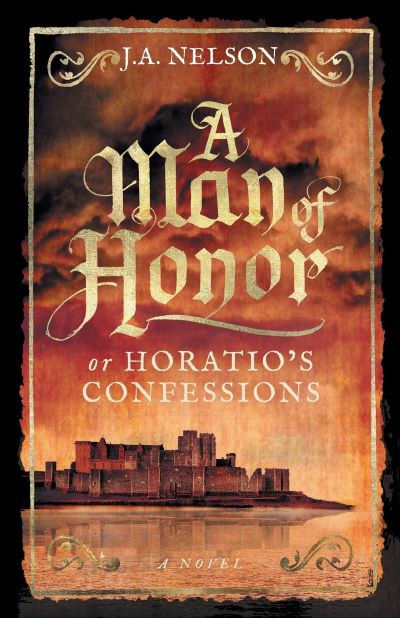
A Man of Honor Blog Tour and Review

  A Man of Honor, or Horatio's Confessions by J.A. Nelson Publication Date: December 9, 2019 Quill Point Press Paperback, eBook & ...