Showing posts with label excerpt. Show all posts

Monday, February 2, 2015

A House of Light & Stone Excerpt post

A House of Light & Stone by E.J. Runyon
Publication date: September 26, 2014 by Inspired Quill
Paperback ISBN: 978-1-908600-40-0
eBook ISBN:  978-1-908600-41-7
Synopsis:
Its East Los Angeles 1967. Duffy Chavez, a precocious ten-year-old, is from a large, mixed-race, single-parent family.  Duffy lies, cheats, and steals as easily as she excels at skipping grades. She steps in, acting the little mom to her family for her overwhelmed mother.  Her thieving and lying continue even after she makes a pact with her idealistic social worker, Mr. St. John. The deal: during the coming year Duffy will accept the challenge of gaining Self-Knowledge; of becoming more like the real-girlsshe admires all around her.

Often the family scapegoat, she navigates life through world-weary eyes, gentle words, and big heart. Duffys not shy; courageously striking out beyond the expectations of her tight- knit, troubled family. She quests, in her own childlike way, for something more than that which her tribe accepts as their lot. Mama may still beat her, and perverts will cross her path with sickening regularity, but Duffy perseveres. She meets blonde Becca, and her mom Mrs Bettencourt, who runs the corner market. Like all quests, a riddle lies in just who Mrs. B is to Duffys family and only Duffy seems to recognize the undercurrents that flow between her and Mama. 

As the following year of discovery unfolds, Duffy finally meets her cross-road. Will she choose to be a thief and a liar all her life, or believe in herself enough to risk using her gifts of imagination and ingenuity for good?

~~~~~~~~~~~~~~~~~~~~~~~~~~~~~~~~~~~~~~~~~~~~~~~~~~~~~~~~~~~


SECRETS OF THE DAYS AND NIGHTS
That Christmas when I was still ten, there was more than just the big red book from Mr. St. John for me under the tree. Mama gave me a collection of the Brothers Grimm Fairy Tales. And one big, shiny white book about myths for children, by a guy whose last name was Kingsley. That was the best of the two. The myths.

Barbie got a sewing kit in a round blue basket, with a pincushion in the shape of a tomato. And a new pink brush-and-comb set. She wouldn’t let me touch it, hissing, “For blonde hair only. Don’t even think about using it.”

Chance got a magician’s cape with a top hat and a play wand. Mama was real good with presents when Christmas came around.

Mama invited Mr. St. John, our social worker, this Christmas. He gave us a slim book for the whole family, called The Prophet. Mama was touched. You could see it in her face. My big brother Artie opened that gift up, after Mama read the tag and handed it to him. We all reached for it but he held it up over our heads yelling, “Hold it. I’m doing this. Pero primero siéntense. Siddown.”

So all us kids sat down in the wrappings and ribbons and then Artie went through the table of contents, reading the chapter titles and whose name Mr. St. John had written next to them. I felt
very proud hearing Artie say my name, “On Self-Knowledge. Duffy.” Because then he turned to the
page and read out from the chapter, “Your hearts know in silence the secrets of the days and the
nights…” Justine and Artie both nodded at that. They’re the oldest of us five, so I figured maybe
later I’d ask them what it was supposed to mean.

Mama’s chapter was ‘Reason and Passion.’ I found that out after, when I got the book to
hold and flip through. Artie must have missed it, ’cause he hadn’t read that out loud. The drawings
were nice, kind of fluffy, but only in one color.

 “Duffy. Coffee.” Mama said, and I ran to the kitchen to put a pan of water on to boil. Coffee was one of my jobs. You have to use matches to get the burner going. And you have to be sure to blow out the match, then run it under water from the sink, and then you still can’t just drop it into the trash. Just in case. So there’s lots of steps. But most of the time I was good at it.

I ran back to the Christmas, and Mr. St. John and Mama were on the sofa, laughing over something. Her eyes were bright, and I was glad it was a nice morning with nothing going wrong. Everybody was smiling. Chance kept granting wishes to the girls. “Wishes for ladies!” he called, tossing the cape back over one shoulder. “I got wishes for ladies here.” The top hat was too big for his five-year-old head, and only his ears kept it from falling onto his nose.

I scooped up The Prophet and brought it over to Mama. “Mama, here’s you,” I said, holding out the book to show her the chapter in the list.

While she was reading the title from my hands, Mr. St. John said, “You two have the nicest dark hair.” Mama liked that compliment. With Mr. St. John just back from the Peace Corps she thought he’d be a good person for Artie to be around.

Mama said, “Let’s see the chapter,” and I flipped to it. Holding the book out like a waiter at a table with a steak on a plate. Like they do in the movies. She was still smiling at his comment, and I added, “But Mama’s has the coppery red in it.”

She couldn’t have gotten too far in reading when she reached up and laid her hand on my shoulder; her thumb didn’t move much, but the fingers, unseen by Mr. St. John, with her long red nails, they dug into the back of my shoulder. I straightened up. The burning was hard, but I didn’t bend at the knees. Didn’t cry out. I saw I’d done something wrong, maybe I showed off. So I closed the book and held it on the side she didn’t have a grip on. I pulled the book away, unhurried, till it was behind my back. And still she didn’t let go.

“Thank you, m’hijita,” she said in a low voice. Then she released me and folded her hands in her lap, turning back to Mr. St. John being nice to her.

 “Aannnny wish you want…” Chance cried out.

Barbie yelled from the kitchen, “The coffee water’s boiled off again!” And then my knees did tremble. If Mama got mad the Christmas was ruined. But Justine jumped right up, saying, “I got
it, Mama.” And Mr. St. John, he stood up, too, straight and tall like a hero, “I need some gum. Duff
— want to walk with me to the corner store?” And like Cary Grant, he grabbed up his coat and me,
and we stepped to the front door.

And just that fast I was outside and safe.

He didn’t need me to get any gum, but I was glad for the rescue just the same. The Union Pacific train whistle sounded low and long a few blocks away and I thought of the hobos and the glue sniffers who hung around the tracks. Artie warned us about staying away from them. I figured
if Mr. St. John could have a talk with them, maybe they’d all go join the Peace Corps too, so Chance and I could go and find bottles along the tracks to sell. That might make Mama happy, us helping out by bringing her a loaf of bread or a quarter worth of sandwich meat.

Coming out of the corner store, Mr. St. John walked on the outside of the curb, like I was a lady. I thought of something ladylike to say, because I wanted the Peace Corps stuff to rub off on me, too. “Thank you for the book, Mr. St. John.”

“Oh, you’re welcome, Duff. I’m sure you’re going to get a lot from it as time goes by.” He smiled down at me from way up high. His sky-blue eyes were still strange to see, here in this neighborhood. Here we were all mostly Mexican. Even the other kids in my family, half-white, all but me, but they didn’t have eyes as blue as that.

“Tell me something I don’t know?” I asked. It was a game we played whenever he visited. He was the only one who wasn’t mad that I’d been skipped up two grades; that was something kids in East L.A. weren’t supposed to do.

“Hummm. Look at your hand, Duff. You see these lines?” he asked, pointing to his own hand. “Here? This one and this and this one?”

I looked at mine. “Uh-huh.”

“They’re very important. That top one’s your heart line. That one’s your head line.” He reached and ran his nail along that second line and my fingers curled. I giggled. He went back to his own palm. “This last one here’s your life line; look, see how long and deep that one is? Know why?”

I looked at the deep brown line running off my palm and into my wrist. “’Cause I’m Mexican?”

“Close,” he said. “It’s because you’ve got an abundance of energy. You’ll be very determined to reach any goal you’re questing after.”

“—like a lucky charm?” It was a really deep line.

“Sure. That line says you have what it takes to get anywhere you aspire to.”

Like a lucky charm. Right there in my hand. I’d never drop it. And no one could come take it away.

“Can I ask you something, Mr. St. John?”

“Sure, Duff.” We walked slow, and it was nice to not be hurrying.

“When you said to reach any goal I’m questing after. You mean like Theseus and the Minotaur?
Through a labyrinth?”

“Sure. That’s right, like a Quest. You accept this challenge and you’ll be rewarded at the end.”

“What challenge?” I asked.

“The one from your chapter in The Prophet; ‘On Self-Knowledge.’”

“What’ll I get?”

“What do you want, Duff?” I thought a moment while I concentrated on not stepping on any of the sidewalk cracks. My own Quest, boy!

“To be somebody,” I decided.

“You are someone. You’re Duffy Chavez. The girl with the lovely dark hair.” He swung my arm all playful when he said it, and spun me around like we were headed back to the store, but I stopped walking and got serious in my eyes, so he knew I wasn’t goofing around. I needed to be clear. I wanted him to understand. I looked back behind me to my house and then real low I told him: “No, I mean to be somebody, to not be invisible.”

“Ah.” He nodded. “Well, yes. I believe that’s a fitting reward.”

He didn’t make us start walking on again. He put his hand on my shoulder. It really hurt from when Mama had grabbed me.

I waited for the special words of the Challenge, like in the myths. But he was looking far off down our street. Way beyond the brown of Mama’s front door. And finally I asked, “If I accept your challenge can I have that as a prize? Can I end up being somebody?” I looked up into his face.

“Yes, Honey,” he said. “With self-knowledge you can definitely be somebody.”

“Should I kneel or something?”

He smiled down at me, “No, this is 1965. The New Frontier and all. Very advanced. How about we shake on it?” And he took his hand from my shoulder and held it out to me. I liked it better on my shoulder. Even through the hurt.

“Okay, Mr. St. John. I accept this challenge.” I shook his hand real hard.

That morning after Christmas, when the rest of the house was sleeping, I opened up the Writer’s book he’d given me and on that inside page I wrote: “Duffy Pilar Chavez, Age 11, 1966.” Even though it was still 1965, and I was going to stay age ten until July came again. And even though “Duffy,” a nickname, was my sister’s way of saying DeFoe when we’d been babies and either one’s a silly name for a girl to have, anyway.

It was the beginning of January when we heard the news that Mama had found us a new house and we couldn’t stay here on Hockert Street any more. She told us over dinner. All five of us at the table and her at the kitchen doorway, standing like she was getting ready to run if we took the news bad. Artie and Justine and Barbie, all blonde and older than me, Chance, the baby, and blonde too. Then me, just Duffy, with the brownest eyes and as jet-black hair as you could get. All looking and waiting for Mama to say more.

She’d made us flank steak tacos with all the toppings in pretty little colored bowls, set out up and down the table, and a big casserole dish of Spanish rice, and some zucchini with melted jack cheese on it for the vegetable. And we had red Kool-Aid, too: Chance’s favorite dinner. Mama always made what he liked best, her baby boy. Although Artie, being the oldest of us all, was the champion of eating the most tacos.

“It’s a bigger place, a nicer neighborhood.” Mama’s cough broke into her words, “--no trains.” She covered her mouth with the crook of her elbow, then breathed in big to keep talking. “-- and I think it’s a good move.” None of us answered. Mama reached up with the heel of her palm, cigarette pointed up to the ceiling between two fingers, and wiped back a curl off her forehead.

Because Justine was the oldest girl I figured she’d be the first to say something. But no one spoke up. Barbie started in softly tapping the table leg with her foot, till each tap grew into a kick, her blonde bangs jumping. Tick, tick, tock, tock, whap, whap, the noise went, till her short pageboy haircut was doing the same jump around her ears, the noise growing from mild to mean. Justine let out a breath, and Chance asked if anyone was going to eat the last taco.

I reached over to put it on his plate. Justine finally said, “Okay Mama, we’ll start packing after dinner.” Mama took another drag from her cigarette, ran her finger around the top of her cup, started to say one more thing, then stopped herself; she turned and left us to eat.

After doing the dinner dishes and sweeping the kitchen, we met in the back bedroom, the one with the bunk beds and my rollaway cot. Artie stood us in a row, tall to small, and handed us each two dimes. “If it's a trick and we're gonna be picked up for foster homes again, you keep these dimes,” he said. “There's an extra in case you lose one. If they take these away from you, just find some bottles to sell and hide that dime somewheres they won't find. No one’s gonna do us like the last time.”

We all nodded, except Chance, who'd been born while we were all away those five years. He didn't really know about how it was, except for my stories. He just held his palm up, moving it so his dimes caught light and threw it up onto the ceiling, switching from foot to foot. Artie rested his hand on Chance's shoulder, and then Chance looked up at us, finally listening.

“Anybody tries anything this time, and we'll run to a phone booth and call the cops. Just dial
0 and a lady will help. Got it?” All of us nodded; if the worst came this time, we'd be ready—we
had dimes, we wouldn't let it happen again, we had a plan, we'd made a pact.

After that we walked back into the living room and Artie asked if we should take all our stuff or not. Mama frowned at us, a strange look in her eyes—like she’d been fooled by the question. “Of course. We’re not leaving anything. Pack it all.”

But she might’ve been lying, and we needed to know for reals. The Foster Homes were still in our minds and she really didn’t see what a brave thing it was for Artie to step up and ask.

But Mr. St. John, he didn’t come the next day with the others to take us away in separate black cars. Like those times before. That was the part I hated the most, seeing Justine kneeling and looking back at me while I did the same from a car going the other way. Me alone in another car riding farther and farther away from the rest.

Mama wasn’t fooling; we really were moving—all of us—to a newer, bigger house; she was taking all of us with her. Even me. The one who got Mama mad all the time. Sometimes, I thought if we were Indian that would be what the tribe would call me: The Mad-Getter.

When we had just moved back in with Mama she would blow up some times. Like a sudden monster you forgot to think about in a TV show. Then she’d line us all up for a punishment—even when only one of us had done something wrong. Like playing so hard something would get broke. “Which one of you idiots is going to be first?” she’d ask.

And I’d always wait a breath; send a word from my mind to the guilty one. But they never moved from the line. So then I’d step forward. Just to be done with it. She hated me doing it that way. Maybe it made her feel bad that we were all idiots all the time. Maybe it was that she liked, really liked, to fight. And I failed her. ’Cause she would get madder and yell, “Dammit—fight with me!” But I couldn’t.

So we packed the house up. And we didn’t complain or whine, like I think Mama thought we would. She kept walking from room to room, looking in at us, something like confusion in her eyes. With me, when our eyes met we stayed that way for a moment, there was that disappointed look—then she just turned away and I didn’t look again.

Mama told us we just needed a truck for the boxes and the washing machine. The furniture was being moved for us. She was nervous when the furniture company came and took all the beds and chests and lamps and the sofa and chairs.

But we’d been moved lots of times before, and this was nothing new. Like Artie always joked, we’d been born into captivity. She was the only one who wasn’t used to it. Her and baby Chance.

The morning after the guys in the 1st Street Furniture truck took everything, Mama yelled, “Duffy, come get these milk bottles!” I’d just been thinking how great it was that the store we got the sofa and beds from was kind enough to take our stuff to the next house too, their store’s jingle circling and circling under my breath.

We were eating breakfast standing at the counters in the kitchen and Mama waited for me at the front door. She wasn’t in a good mood. She’d been fighting with Justine all morning, there was nowhere to sit, and now she was starting in on Artie. She slammed the front door closed as I came near, and she walked back into the kitchen. Yelling more.

I pulled two of the half-gallon bottles from the wood and metal milk crate, and walked back to the kitchen with each of them pulling on my arm sockets. There’d be three other trips to get them all.

“What’s this gonna cost me, buster?” she was asking Artie. She’d set to work on making the lunches. Five of them. The boys got a full baloney and cheese sandwich and a full peanut butter-and-jelly one, too. Us girls got the lunchmeat and cheese, but only a half of the peanut butter and jelly. Chance was standing on an old milk crate at the counter, waiting to drop in the apples, one to each lunch bag. The voice on the radio sang ‘Trece Treinta! K-W-K-W!’ and then the man said, “Ahora, más.”

On the last trip through the living room with the last of the milk my fingers gave out, and one of the bottles slipped from my grip and shattered on the wood floor. I froze but couldn’t stop myself; I started crying, thinking of the beating that was coming next.

Mama came out and held the other kids back with her outstretched arm, “Artie get a mop. Chance stay out of here, you’re barefoot.”

I looked up at her; she looked like she wanted to cry, too. “It’s okay. Just stand still,” and she wasn’t mad.

 I’d been trying so hard. She reached in and plucked me from the flood and she kept repeating, “It’s okay. Only milk. Don’t cry.” And while Artie mopped and swept up the glass, she leaned against the wall and slid down to sitting with me in her arms, against the wall and out of the huge milk puddle. She held me and the surviving bottle in her lap, and stroked my hair, and softly, in Spanish, she kept saying, “No estoy ojado.” It’s okay.

That night before the moving day we spent sleeping on the floor, using clothes and sheets to make lumpy pallets. I told Chance that this was how cowboys slept—out on the range, under the stars. The blue shadows of the empty room and the boxes piled high like far-off mesas helped the story as I whispered it to him. “The cowboys, they get to sing to the cattle, low and soft ’cause it’s night and they don’t want to wake up any coyotes.”

I went on and on about cactus and rattlers and the moon on the hills in the distance, till I could hear his breathing slowing down for sleep. I rolled over and scrunched even closer to him to keep warm. He lifted his head and whispered in my ear, “Duffy, can we be cowboys when we get big?”

“I thought you wanted to dance on the TV.”

“Can’t we do both?”


Me and Chance sat in the back of a truck, stuffed in between the boxes and the washing machine.
Artie whistled as he tied a tarp, flat, over us, wrapping the ropes tight, high up against the truck’s fence sides; turning the sky to a circus tent. Though we could see out the sides still. He wiggled his fingers to us and patted the truck’s slat-sides. The girls, Barbie and Justine, were up in the cab next to Mama, and then Artie got to driving—tall behind the wheel, even though he was only just past fifteen by a month or two.

The streets slipped past us, and I watched them go from out the back of the truck slats. There was the liquor store Mama sent me running to, to get her cigarettes. The Amigos’ Burger where she’d meet us after work each payday, to treat us to hot dogs and soda, all of us each getting to choose anything we wanted from the menu board. It was all getting away—the school, the playground. All of it.

I tried to make each place a story in my brain. Something to hold and remember for my New Year journal. Something to retell Chance late at night. Something saved, because Artie was going to be on the freeway soon headed someplace only he and Mama knew how to get to, going so fast I knew we’d never see any of this again.

“Once, on Hockert Street, I met Mama for the first time,” I told Chance. “I was little, as small as you are now.”

He hunched his shoulders down and leaned his head in close, to hear me over the rush of the freeway noise. “Were you in kinnergarden like me?”

“No, I got to skip that, you gonna listen? Well, Mama, she was the most beautiful lady I’d ever seen up close. Like a movie star. Like Sophia Loren.”

Chance added, “An’ she wore a red dress with a big shiny black leather belt.”

“And big black, round earrings, too,” I said. “There on the front porch, with the four of us waiting and inside a baby was crying. She took me aside and told me, ‘If you’re good and you help me with all the others, I’ll let you in and you can stay.’”

“An’ you peeked in the door to see the noise and saw me asleep, barely a baby, and that’s why you’re my guardian angel.” He nodded. This was one of the “How I Met You” stories I’d told Chance over and over again. He knew most of them by heart. You have to do that coming from Foster Homes. No one else knows if I cried as a baby, or if I was sweet or good, no one ever will. I wanted for Chance to have things different. And from now on I’d have to add the Hockert Street stories to them, too.

The freeway’s wind was rushing over our curved backs now, hitting us under the tarp-sky. The force of it keeping us low, wrapped into ourselves: a punishment. And then it came to me all at once, the secret of the days and nights. A new place wasn’t just new to whoever moved there. Me and Chance, we were gonna be new too.

The back of my neck tingled with the thought and suddenly that freeway wind wasn’t hurting me anymore. It was washing all of my life away. Cleaning me up to any new person I wanted to be once we got to whatever new street Mama had for us. I could pick out the best of me and only be that. I could win the challenge and never drop a bottle of milk again in my whole new life. I could
teach Chance to do the same.

I turned my head from the smell of gas around us to his ear, and raised my voice loud over the noise of freeway.

“Once, when we were locked out and it was getting dark, and Mama was still at her job, Artie and Justine were nowhere to be found—”

“An’ my stomach was hurting ’cause I was hungry—” Chance added.

“—an’ I found a big box and stood on it, I lifted you up on my shoulders, up against the house. Even though your feet wobbled, and you were a-scared and shaking, you were brave. You crawled through the little window up over the bunk beds in the back room. You let us in and saved the day.” I never told Chance the part about me not wanting to jump up on the box and climb through the window myself with him below watching: a-scared to do it because he’d see under my dress, that I had dirty underwears on and maybe he’d laugh at me. I was new now; I could change my stories like I wanted. My underwear secret I’d save for the journal.

Chance grinned down into his knees, remembering how he’d saved the day. “We ate the rice from the refrig-alater.”

So, I said, “And the moral is, even the smallest have gifts to share.”

~~~~~~~~~~~~~~~~~~~~~~~~~~~~~~~~~~~~~~~~~~~~~~~~~~~~~~~~~~~~~~~

About The Author

Since 2002 E.J. Runyon’s found herself moving on to smaller desert towns in the US Southwest, while working to become the author and writing coach she planned on being when she first quit a career in software. She sold her home to finance her degree in Creative Writing and her Grad-work in Online Teaching and Learning, and she's never looked back.
Now, her life revolves around her own writing, on coaching clients 1-on-1, and on Bridge to Story—an online creativity coaching site she runs—and you know, being a better person day to day.
She participates yearly in National Novel Writing Month - an event she's been involved in since 2001. Most of her titles come from that effort. Her publisher is Inspired Quill (UK), a Social Enterprise Press. E.J.'s passion is focused on writing the finest prose, and on getting others writing too; at any level, in any genre they choose. It’s her life’s work now.

Website: www.bridgetostory.com
Blog: http://www.ej-runyon.com/ 
Twitter: @EJRunyon


Wednesday, November 19, 2014

Last Words Blog Tour - Book Excerpt


Last Words by Rich Zahradnik
Publication date: October 1, 2014 by Camel Press
ISBN: 9781603812078

Description:
In March of 1975, as New York City hurtles toward bankruptcy and the Bronx burns, newsman Coleridge Taylor roams police precincts and ERs. He is looking for the story that will deliver him from obits, his place of exile at the Messenger-Telegram. Ever since he was demoted from the police beat for inventing sources, the 34-year-old has been a lost soul.

A break comes at Bellevue, where Taylor views the body of a homeless teen picked up in the Meatpacking District. Taylor smells a rat: the dead boy looks too clean, and he's wearing a distinctive Army field jacket. A little digging reveals that the jacket belonged to a hobo named Mark Voichek and that the teen was a spoiled society kid up to no good, the son of a city official.

Taylor's efforts to protect Voichek put him on the hit list of three goons who are willing to kill any number of street people to cover tracks that just might lead to City Hall. Taylor has only one ally in the newsroom, young and lovely reporter Laura Wheeler. Time is not on his side. If he doesn't wrap this story up soon, he'll be back on the obits page--as a headline, not a byline. Last Words is the first book in the Coleridge Taylor mystery series.


~~~~~~~~~~~~~~~~~~~~~~~~~~~~~~~~~~~~~~~~~


Excerpt from
LAST WORDS
By Rich Zahradnik

The orderly rolled the gurney onto an elevator. Taylor stepped on, too. The orderly read his press pass. It expired in three months, and if Taylor couldn’t get back on the police beat by then, he’d lose it and all the access it gave him. Doors all over the city would slam shut. The thought chilled him.

“Coleridge Samuel Taylor.”

“Just Taylor.” He hated the literary ornamentation of his name.

“Name’s Jackson.”

The autopsy room looked like any operating theater with its silver-domed lights, trolleys of medical instruments and glass- fronted metal cabinets. The acrid smell of disinfectant was even stronger here.

A second orderly came in and helped Jackson shift the wrapped body onto a table, both of them grunting.

“Jesus, this body is frozen stiff,” Jackson said.

The second orderly shrugged and left, as if moving bodies was his only job.

“You said he died of exposure, right?” Taylor leaned in.

“Yeah, but he feels like ….” The orderly frowned. “The last time a body came in frozen solid like this was when a jumper went into the Hudson back in January.” He pulled the sheets open near the neck. The corpse was still dressed and the orderly fingered the material of the outer clothing. “The coat and sweater are cold but not frozen.” He slid his hand inside the sweater. “The undershirt feels like it’s iced right to him. The skin is frozen.”

“That doesn’t make sense.” Taylor looked from the orderly to the body on the slab. “It’s like he froze from the inside out. Or his outer clothes were put on after he froze.” He made a note of this. “Be interesting to hear what the pathologist makes of it.”

“Not much if he thinks he’s cutting a homeless boy. How are you going to do a story on a dead nobody?” The orderly sighed and turned away.

I’ll find out what makes him a somebody. Getting frozen in your underwear and dressed by another person might do the trick.

“You gotta be a big somebody to get your death notice in the papers here.”

This victim’s story already bothered him. The boy was going to disappear. Taylor was watching it happen. No last words for the family. No notice taken anywhere by anyone. It had happened before, with Billy. This was going on now in Taylor’s city. There was no excuse for it.

“When did the body come in?”

“Night watch. Three, four in the morning.”

“You’re just now rolling him in?”

“No room at the inn. Kept the body outside in the ambulance.”

“What if they got another call?”

“Couldn’t. No one to replace the driver’s going off shift. Poor bastards had to take a cab back to their house. These budget cuts are just crazy. So we kept him cold out there. The guys just came back to get their wagon.”

“Where’d they pick him up?”

“The Meatpacking District.” Jackson looked at the body again. “I’ll tell you one thing. I doubt they’ll be cutting today. It’s going to take a whole shift to defrost him. Very strange. Or plain bad luck.”

Only the facts interested Taylor. They’d explain how this boy froze from the inside out, the cause and effect. Nothing unlucky. Nothing strange.

Jackson pulled off the sheet. The dead boy wore an army field jacket similar to Taylor’s. Threads hung at the edges of the rectangle above the left breast pocket where a name patch should have been.

“Whatever the name tag said, it wasn’t this kid’s,” Taylor said. “He’s too young for the military.” Could be the father’s, Taylor thought. Or maybe the boy bought it at the Army-Navy. Taylor would check all that out. The jacket had seen a lot of wear and tear. Some of that might be from life on the street.

“Now that I think of it,” Jackson said, “it looks like the one I got when I fought in Europe. You don’t see these as much. Thing never was warm enough.”

Jackson was right. The boy’s jacket featured lapels instead of a circular collar and the fabric looked thinner. The kid wore dungarees, patched the length of both legs, more patches than jean material really. The “V” of a blue sweater, probably wool, showed under the jacket.

Jackson nodded at Taylor’s jacket. “You a vet?”

“No.”

“Just like the look?”

“No.” The implication stung, as if his was a fashion statement. His brother, trained to fight somewhere cold in Europe, was ordered to Vietnam. Billy didn’t need the heavy jacket, or didn’t want to pack it, or had wanted to leave something behind with his older brother. Taylor wasn’t sure which. He gave it to Taylor and never came back. Maybe because of the question, the teenager became his brother Billy for a moment. Another kid forever lost to his family. The boy was the same height, though slighter and younger. What was younger when you were dead?

The orderly was saying something, forcing Billy’s face to fade, replaced by that of the dead boy. This face was smooth, without lines, and the nose straight. His lips were full, almost pouting, and his gray eyes looked directly into the bright overhead lights, unblinded and blind. His hair was thick, long and clean, which was odd. If this kid was homeless, it should have been matted and dirty.

“Look at this.” Jackson pointed to the jacket’s right sleeve.

More than twenty national flags were sewn down the outside of the right arm of the field jacket, from the shoulder to the cuff. France, Italy, USA, East Germany, Canada, the USSR, West Germany, Red China, and countries some Taylor couldn’t identify.

Taylor walked around the table. “Same on this side. No unit or rank. Those were cut away a long time ago. Just more flags. It’s like the UN.”

Thousands of army field jackets hung in the closets of New York vets, the families of the dead and even ex-hippies, but none would look like this one. Taylor knew people would remember it. This was starting to look like a story he could follow.

Jackson left the room. Taylor checked the boy’s left hand, leaned in to get closer and used his Bic pen to lift the fingers. They were smooth, almost feminine, with telltale signs of civilized living—clean, well-trimmed fingernails. Not a speck of dirt under any of them. The fingers on the right hand were the same. This kid wasn’t homeless, or hadn’t been for long. The field jacket would lead to someone who knew him, who could tell his story. He listed the countries of the flags he could ID and descriptions of those he couldn’t.

“I thought we were rid of you, Taylor.” Dr. R. Martin Quirk, the assistant coroner, stood inside the door. Taylor looked from Quirk’s long face to the stubby fingers that seemed imperfect instruments for prodding inside bodies, even dead ones.

“This kid wasn’t homeless,” Taylor said.

“What do you know? Don’t turn this John Doe into another of your page one specials. I’ve got six homicides in the cooler, bodies piling up in the emergency room—high priority, cops shooting civilians—and five accidentals, old people who froze to death in their apartments. I’ve got to cut them all anyway. They won’t let me put ‘unpaid Con Ed bill’ as cause on the death certificate.”

“Will you at least check the ‘missing’ list?”

Quirk always claimed to be overworked, but he was just plain lazy.

“That’s a cop’s job.”

“They won’t.”

“I’m not their master, thank Christ. Why don’t you do it? You’re the reporter.”

Taylor decided not to disabuse him of that notion. From his jacket’s right pocket, he pulled out and opened the collapsible Polaroid he carried for capturing a scene when a click was faster than taking notes. A snap-flash and Taylor held the instant photo, a black square until it developed. In two minutes, chemicals and metals would resolve into a color picture of the dead boy’s face. He needed it to track down who the kid was.

“I’ll call you to get cause of death.” He put the developing picture in his coat pocket next to his wallet and went straight through the double doors without glancing back.

Why didn’t the boy show the wear and tear of rough living? He might have been a recent arrival on the street, a runaway who didn’t bargain on the freezing weather and died almost as soon as he ran. A sad story. Newspaper readers loved sad stories, even if they said they didn’t.


Excerpted from the book LAST WORDS by Rich Zahradnik.  Copyright © 2014 by Rich Zahradnik.  Reprinted with permission of Camel Press.  All rights reserved.


Tuesday, November 18, 2014

Global Predator blog tour - Book Excerpt


Global Predator by Jack MacLean
Publication date: September 19, 2014 by Legend Publishing
ISBN: 978-1783014859
Description:

High above the mountains of the North West Frontier, a Global Predator circles waiting to unleash its Hellfire missiles. The trail of Osama Bin Laden’s deputy, the elusive Egyptian terror master, Ayman al-Zawahiri has gone cold until a chance recording identified by a translator at the National Security Agency offers new clues. A special intelligence team assembles and plots to catch at him at a meeting with other high ranking al Qaeda leaders. In Pakistan’s beautiful Swat Valley, the local Taliban have been stepping up their attacks on anyone educating girls. English aid worker Sally is taken hostage while visiting one of her schools. When Wilkins, escaping his reckless trading mistakes at his London bank, is forced to rescue her, he finds himself trapped in a world of blind fear and terror. Only one person can now make sense of what is happening and stop a massacre of innocent schoolgirls.


About the Author:

Jack MacLean is the pen name of a prize-winning former foreign correspondent for a British newspaper with firsthand experience of Asia. He is the author of eight non-fiction works.


~~~~~~~~~~~~~~~~~~~~~~~~~~~~~

Excerpt from
GLOBAL PREDATOR
By Jack MacLean

A convoy of three dented and mud-spattered SUVs roared up the forest track and jerked to a halt at a clearing overlooking the valley they had just left. A thickset, clumsy man in his late fifties climbed out of the middle vehicle breathing heavily. He peered through the thick pebble glasses perched on a large bulbous nose, scouring the track along which they had just travelled. He grunted in approval. No one was following. Meanwhile, the three vehicles edged forward until they were hidden from sight under a clump of pine trees. One of the drivers emerged with a pair of large army binoculars and handed them deferentially to the older man. He held them in front of his glasses before awkwardly removing them and then adjusted both lenses of the binoculars. First, he raised them to search the clear blue skies above and then lowered the binoculars to examine a village set in the valley below among a patchwork of irrigated fields. Families were out in the fields scything the autumn wheat harvest and bundling the stalks ready for threshing. Then he turned the binoculars to examine a large compound dominated by a domed white mosque. It lay a few miles to the west of the village and was surrounded by a high wall which formed a rough rectangle. At the corners were small guard platforms.

It was still mid-morning and a stiff breeze was pushing a bank of clouds from the west. The group of watchers waited in expectant silence. After twenty minutes, the wind brought the wailing sound of a call to prayers. Then almost a minute later, they heard a faint sound of a small motor engine and the watchers tilted their heads upwards, searching the sky for the source of the sound. There was nothing visible. Then, as the call to prayers ended, they saw streaks from two small silver missiles targeting the compound. Seconds later, the sound of two blasts echoed across the valley. The explosions created a cloud of dust and debris as the mud brick buildings shattered. The cloud swiftly rose into the air and then the debris fell as quickly. The mosqu4e seemed to have survived intact. Then they could hear a new sound, a steady whop-whop from helicopters. A group of six Cobra attack helicopters appeared and within minutes they could hear the intermittent sound of the machine-gun fire.

‘Pakistani soldiers,’ whispered one of the men watching. The older man nodded.

‘Allah has shown his mercy to you. Blessed is the name of the Prophet,’ the younger man said sounding excited. ‘They were coming for you but they failed again.’

Al-Zawahiri shook his head slowly. He did not share his followers’ enthusiasm. Instead he felt a familiar intense anger begin to burn inside. The Americans had somehow been tracking him and only a messenger carrying an urgent warning to flee had saved them. He had no known whether to trust the Pakistani or not. The Pakistanis had helped him escape their own attack but next time he might not escape in time. Another hour and the messenger would have arrived too late.

From the compound there was a hesitant and sporadic return of fire. Three of the helicopters lying low over the fields began strafing the walls of the compound. In the fields the farmers and their families stood and stared. A few figures began running back to their houses, while out of the compound, youths dressed in white robes and skull caps ran out and fled towards the village. In the seminary, another scattered group of men armed with a collection of guns and old rifles began firing wildly.

Within minutes, soldiers in dark olive and khaki combat gear were climbing down ladders and dropped from the three helicopters as they hovered above the fields outside the seminary. Soon the troops began running towards the mosque. A pick-up truck and a minibus which tore out of the gates on to the road leading to the village were strafed by gunfire from other helicopters hovering just above the compound. Men piled out of the jeep moments before it exploded. The watchers could see more soldiers rappelling down from the helicopters into the compound. Three minutes later, the rhythmic bursts of gunfire suddenly stopped. The helicopter’s wings stopped rotating. It seemed that resistance within the compound had ceased.

Al-Zawahiri slowly lifted the binoculars away from his eyes. Tears blinded his eyes and he let them trickle into his thick white beard. He murmured some instructions to the driver beside him. He went to the SUV hidden under the trees and returned carrying carpets which he laid down. The other members of the convoy joined the older man and the driver in kneeling down on the carpets prostrating themselves towards Mecca. The elderly Egyptian then sat up and began addressing the group. They listened in reverential silence awaiting his guidance. He spoke clearly and slowly. First he offered thanks for their deliverance and then he spoke of revenge.

‘If we get martyrdom, so we achieve that we were looking for, for the flag of Jihad will never fall down until the Day of Judgment as we were informed by the prophet of Allah (peach and blessings be upon him). Oh brothers, if we die, we meet with our beloved ones, because the gardens of my Lord are prepared for us, and its birds flap their wings around us. So they await us in the eternal residence. Verily, Allah has chosen us for his call. Brothers, go ahead and don’t look back, your path has been covered in blood. By the divine mercy of Allah, I call on the prophet thrice blessed be his name, to recognize the sacrifice of these martyrs. They are enjoying their reward in paradise but we here who have been saved must now prepare their revenge. By this hand, I swear that Satan’s attack against a school, a place of holy learning will be avenged. These invaders will regret what they have done and will curse themselves for the use of these drones. We will turn them against our enemies and see them weep over the destruction wrought on the children they claim to be protecting. Before the next Eid we will see them weep tears of blood at their folly. We will find a school and turn the sword of our enemies against their own bodies.’ Then he stopped and raised his hand and brought it down in a savage chop.


Excerpted from the book GLOBAL PREDATOR by Jack MacLean.  Copyright © 2014 by Jack MacLean.  Reprinted with permission of Legend Publishing.  All rights reserved.


Wednesday, October 22, 2014

Sleep in Peace Tonight Excerpt post

I am happy to participate in the blog tour for the new book by James MacManus, Sleep in Peace Tonight. I previously reviewed his book Black Venus and quite enjoyed it. Please enjoy the excerpt.


Sleep in Peace Tonight by James MacManus

Publication date: October 7, 2014 by Thomas Dunne Books

Description:

It’s January 1941, and the Blitz is devastating England. Food supplies are low, Tube stations in London have become bomb shelters, and U-boats have hampered any hope of easy victory. Though the United States maintains its isolationist position, Churchill knows that England is finished without the aid of its powerful ally.

Harry Hopkins, President Roosevelt’s most trusted adviser, is sent to London as his emissary, and there he falls under the spell of Churchill’s commanding rhetoric---and legendary drinking habits. As he experiences life in a country under attack, Hopkins questions the United States’ silence in the war. But back home FDR is paranoid about the isolationist lobby, and even Hopkins is having trouble convincing him to support the war.

As Hopkins grapples with his mission and personal loyalties, he also revels in secret clubs with newsman Edward R. Murrow and has an affair with his younger driver. Except Hopkins doesn’t know that his driver is a British intelligence agent. She craves wartime action and will go to any lengths to prove she should be on the front line. This is London under fire, and it’s only when the night descends and the bombs fall that people’s inner darkness comes to light.

In Sleep in Peace Tonight, a tale of courage, loyalty, and love, and the sacrifices one will make in the name of each, James MacManus brings to life not only Blitz-era London and the tortuous politics of the White House but also the poignant characters and personalities that shaped the course of world history.


JAMES MACMANUS is the managing director of The Times Literary Supplement. He is the author of Ocean Devil, which was made into a film starring Jonathan Rhys Meyers. His other novels include The Language of the Sea and Black Venus. www.jamesmacmanus.com  


~~~~~~~~~~~~~~~~~~~~~~~~~~~~


SLEEP IN PEACE TONIGHT By James MacManus


Chapter 1 Excerpt

In spite of the whisky and the long journey, Hopkins found sleep difficult that night. He had been
shocked by the earsplitting cacophony of guns, bombs, and sirens during the raid. News reports from
London all talked of civilian deaths, the destruction of homes, the plight of the homeless, food shortages, rationing, queues, but none mentioned the deafening nightly thunder of the Blitz. He wondered how anyone got any sleep.

The next morning, as his car drove down Park Lane to 10 Downing Street, he realized that sleep
was probably a dimly remembered luxury for most Londoners. Despite the cold, he wound the window down and caught the acrid smell of smoke and burning. He saw pale faces pinched with cold waiting patiently at bus stops, trying to get to work. People stamped their feet and rubbed gloved hands against the cold, craning around the queue hoping to see their bus. Others gave up the wait and trudged past still- burning buildings, heads down, hands clasping handbags or briefcases, all wondering on that freezing morning whether there would be transport home that night. They looked exhausted, hollowed out, half people.

Red double- decker buses lumbered over still- smoldering rubble strewn across the roads, weaving past piles of shattered brick and occasional geysers of water as they went from bus stop to bus stop scooping up passengers from long, orderly queues.

As they passed Hyde Park Hopkins saw the antiaircraft crews cleaning and servicing the guns for
the night ahead. Piles of expended shell cases were stacked neatly in brass pyramids under the plane trees. Elderly men and women walked dogs around the gun emplacements as if it were normal to find batteries of long- barreled 3.7- inch antiaircraft guns in the middle of a city park.

That’s the point, Hopkins realized. This is normal. The Blitz had been going on for four months. Twenty- eight thousand people had been killed in London alone and forty thousand homes destroyed, leaving almost half a million people displaced. And yet here on the streets on a bitter January morning people were queuing for the bus and trudging to work over the debris from the latest raid. The chargé d’affaires had been right. No one in Washington had any idea of what was happening in London.

Hopkins opened his briefcase and pulled out his letter of authorization from President Roosevelt:

     Reposing special faith and confidence in you, I am asking you to proceed at your earliest convenience to Great Britain, there to act as my personal representative. I am also asking you to convey a communication in this sense to His Majesty George VI. You will of course communicate to this government any matters which may come to your attention in the performance of your mission which you may feel will serve the best interests of the United States. 
     With all best wishes for the success of your mission I am,     Sincerely yours     Franklin D. Roosevelt


SLEEP IN PEACE TO NIGHT. Copyright © 2014 by James MacManus. All rights reserved. Printed in the United States of America. For information, address St. Martin’s Press, 175 Fifth Avenue, New York, N.Y. 10010.


Thursday, October 9, 2014

Night of a Thousand Stars Excerpt

02_Night of a Thousand Stars


Night of a Thousand Stars by Deanna Raybourn
Publication Date: October 1, 2014
Harlequin MIRA
Formats: eBook, Paperback
Genre: Historical Fiction


Add to GR Button

New York Times bestselling author Deanna Raybourn returns with a Jazz Age tale of grand adventure...

On the verge of a stilted life as an aristocrat's wife, Poppy Hammond does the only sensible thing—she flees the chapel in her wedding gown. Assisted by the handsome curate who calls himself Sebastian Cantrip, she spirits away to her estranged father's quiet country village, pursued by the family she left in uproar. But when the dust of her broken engagement settles and Sebastian disappears under mysterious circumstances, Poppy discovers there is more to her hero than it seems.

With only her feisty lady's maid for company, Poppy secures employment and travels incognita—east across the seas, chasing a hunch and the whisper of clues. Danger abounds beneath the canopies of the silken city, and Poppy finds herself in the perilous sights of those who will stop at nothing to recover a fabled ancient treasure. Torn between allegiance to her kindly employer and a dashing, shadowy figure, Poppy will risk it all as she attempts to unravel a much larger plan—one that stretches to the very heart of the British government, and one that could endanger everything, and everyone, that she holds dear.

Buy the Book


Amazon (Kindle)
Amazon (Paperback)
Barnes & Noble (Nook)
Barnes & Noble (Paperback)
Books-a-Million
iTunes
Kobo


~~~~~~~~~~~~~~~~~~~~~~~~~~~~~~~~~~~~~~~~~~~~~~~~

Chapter One
March 1920
“I say, if you’re running away from your wedding, you’re going about it quite wrong.”
I paused with my leg out the window, satin wedding gown hitched up above my knees. A layer of tulle floated over my face, obscuring my view. I shoved it aside to find a tall, bespectacled young man standing behind me. His expression was serious, but there was an unmistakable gleam in his eyes that was distinctly at odds with his clerical garb.
“Oh! Are you the curate? I know you can’t be the vicar. I met him last night at the rehearsal and he’s simply ancient. Looks like Methuselah’s godfather. You’re awfully young to be a priest, aren’t you?” I asked, narrowing my eyes at him.
“But I’m wearing a dog collar. I must be,” he protested. “And as I said, if you’re running away, you’ve gone about it quite stupidly.”
“I have not,” I returned hotly. “I managed to elude both my mother and my future mother-in-law, and if you think that was easy, I’d like to sell you a bridge in Brooklyn.”
“Brooklyn? Where on earth is that?”
I rolled my eyes heavenward. “New York. Where I live.”
“You can’t be American. You speak properly.”
“My parents are English and I was educated here—oh, criminy, I don’t have time for this!” I pushed my head out the window, but to my intense irritation, he pulled me back, his large hands gently crushing the puffed sleeves of my gown.
“You haven’t thought this through, have you? You can get out the window easily enough, but what then? You can’t exactly hop on the Underground dressed like that. And have you money for a cab?”
“I—” I snapped my mouth shut, thinking furiously. “No, I haven’t. I thought I’d just get away first and worry about the rest of it later.”
“As I said, not a very good plan. Where are you bound, anyway?”
I said nothing. My escape plan was not so much a plan as a desperate flight from the church as soon as I heard the organist warming up the Mendelssohn. I was beginning to see the flaw in that thinking thanks to the helpful curate. “Surely you don’t intend to go back to the hotel?” he went on. “All your friends and relations will go there straight away when they realise you’ve gone missing. And since your stepfather is Reginald Hammond—”
I brandished my bouquet at him, flowers snapping on their slender stems. “Don’t finish that sentence, I beg you. I know exactly what will happen if the newspapers get hold of the story. Fine. I need a place to lie low, and I have one, I think, but I will need a ride.” I stared him down. “Do you have a motorcar?”
He looked startled. “Well, yes, but—”
“Excellent. You can drive me.”
“See here, Miss Hammond, I don’t usually make a habit of helping runaway brides to abscond. After all, from what I hear Mr. Madderley is a perfectly nice fellow. You might be making a frightful mistake, and how would it look to the bishop if I aided and abetted—”
“Never mind!” I said irritably. I poked my head through the window again, and this time when he retrieved me he was almost smiling, although a slim line of worry still threaded between his brows.
“All right then, I surrender. Where are you going?”
I pointed in the direction I thought might be west. “To Devon.”
He raised his brows skyward. “You don’t ask for much, do you?”
“I’ll go on my own then,” I told him, setting my chin firmly. Exactly how, I had no idea, but I could always think of that later.
He seemed to be wrestling with something, but a sound at the door decided him. “Time to get on. My motorcar is parked just in the next street. I’ll drive you to Devon.”
I gave him what I hoped was a dazzling smile. “Oh, you are a lamb, the absolute bee’s knees!”
“No, I’m not. But we won’t quarrel about that now. I locked the door behind me but someone’s rattling the knob, and I give them about two minutes before they find the key. Out you go, Miss Hammond.”
Without a further word, he shoved me lightly through the window and I landed in the shrubbery. I smothered a few choice words as I bounced out of his way. He vaulted over the windowsill and landed on his feet—quite athletically for a clergyman.
“That was completely uncalled-for—” I began, furiously plucking leaves out of the veil.
He grabbed my hand and I stopped talking, as surprised by the gesture as the warmth of his hand.
“Come along, Miss Hammond. I think I hear your mother,” he said.
I gave a little shriek and began to run. At the last moment, I remembered the bouquet—a heavy, spidery affair of lilies and ivy that I detested. I flung it behind us, laughing as I ran.


“I shouldn’t have laughed,” I said mournfully. We were in the motorcar—a chic little affair painted a startling shade of bright blue—and the curate was weaving his way nimbly through the London traffic. He seemed to be listening with only half an ear.
“What was that?”
“I said I shouldn’t have laughed. I mean, I feel relieved, enormously so, if I’m honest, but then there’s Gerald. One does feel badly about Gerald.”
“Why? Will you break his heart?”
“What an absurd question,” I said, shoving aside the veil so I could look the curate fully in the face. “And what a rude one.” I lapsed into near-silence, muttering to myself as I unpicked the pins that held the veil in place. “I don’t know,” I said after a while. “I mean, Gerald is so guarded, so English, it’s impossible to tell. He might be gutted. But he might not. He’s just such a practical fellow—do you understand? Sometimes I had the feeling he had simply ticked me off a list.”
“A list?” The curate dodged the little motorcar around an idling lorry, causing a cart driver to abuse him loudly. He waved a vague apology and motored on. For a curate, he drove with considerable flair.
“Yes. You know—the list of things all proper English gentlemen are expected to do. Go to school, meet a suitable girl, get married, father an heir and a spare, shoot things, die quietly.”
“Sounds rather grim when you put it like that.”
“It is grim, literally so in Gerald’s case. He has a shooting lodge in Norfolk called Grimfield. It’s the most appalling house I’ve ever seen, like something out of a Brontë novel. I half expected to find a mad wife locked up in the attic or Heathcliff abusing someone in the stables.”
“Did you?”
“No, thank heaven. Nothing but furniture in the attic and horses in the stables. Rather disappointingly prosaic, as it happens. But the point is, men like Gerald have their lives already laid out for them in a tidy little pattern. And I’m, well, I’m simply not tidy.” I glanced at the interior of the motorcar. Books and discarded wellies fought for space with a spare overcoat and crumpled bits of greaseproof paper—the remains of many sandwich suppers, it seemed. “You’re untidy too, I’m glad to see. I always think a little disorder means a creative mind. And I have dreams of my own, you know.” I paused then hurried on, hoping he wouldn’t think to ask what those dreams might be. I couldn’t explain them to him; I didn’t even understand them myself. “I realised with Gerald, my life would always take second place. I would be his wife, and eventually Viscountess Madderley, and then I would die. In the meantime I would open fêtes and have his children and perhaps hold a memorable dinner party or two, but what else? Nothing. I would have walked into that church today as Penelope Hammond and walked out as the Honourable Mrs. Gerald Madderley, and no one would have remembered me except as a footnote in the chronicles of the Madderley family.”
“Quite the existential crisis,” he said lightly. I nodded.
“Precisely. I’m very glad you understand these things.” I looked around again. “I don’t suppose you have a cigarette lying about anywhere? I'd very much like one.”
He gestured towards the glovebox and I helped myself. As soon as I opened it, an avalanche of business cards, tickets, receipts and even a prayer book fell out. I waved a slip of paper at him. “You haven’t paid your garage bill,” I told him. “Second notice.”
He smiled and pocketed the paper. “Slipped my mind. I’ll take care of it tomorrow.”
I shoveled the rest of the detritus back into the glovebox, and he produced a packet of matches. I lit a cigarette and settled back then gave a little shriek of dismay. “Heavens, where are my manners? I forgot to ask if you wanted one.”
He shook his head. “I don’t indulge.”
I cocked my head. “But you keep them around?”
“One never knows when they’ll be in demand,” he said. "How long have you had the habit?"
"Oh, I don't. It just seems the sort of thing a runaway bride ought to do. I'll be notorious now, you know."
    I gave the unlit cigarette a sniff. "Heavens, that's foul. I think I shall have to find a different vice." I dropped the cigarette back into the packet.
    He smiled but said nothing and we lapsed into a comfortable silence.
I studied him—from the unlined, rather noble brow to the shabby, oversized suit of clothes with the shiny knees and the unpolished shoes. There was something improbable about him, as if in looking at him one could add two and two and never make four. There was an occasional, just occasional, flash from his dark eyes that put me in mind of a buccaneer. He was broad-shouldered and athletic, but the spectacles and occupation hinted he was bookish.
There were other contradictions as well, I observed. Being a curate clearly didn’t pay well, but the car was mint. Perhaps he came from family money, I surmised. Or perhaps he had a secret gambling habit. I gave him a piercing look. “You don’t smoke. Do you have other vices? Secret sins? I adore secrets.”
Another fellow might have taken offence but he merely laughed. “None worth talking about. Besides, we were discussing you. Tell me,” he said, smoothly negotiating a roundabout and shooting the motorcar out onto the road towards Devon, “What prompted this examination of your feelings? It couldn’t be just the thought of marrying him. You’ve had months to accustom yourself to the notion of being the future Viscountess Madderley. Why bolt now?”
I hesitated, feeling my cheeks grow warm. “Well, I might as well tell you. You are a priest, after all. It would be nice to talk about it, and since you’re bound by the confessional, it would be perfectly safe to tell you because if you ever tell anyone you’ll be damned forever.”
His lips twitched as if he were suppressing a smile. “That isn’t exactly how it works, you know.”
I flapped a hand. “Close enough. I always had doubts about Gerald, if I’m honest. Ever since he asked me to dance at the Crichlows’ Christmas ball during the little season. He was just so staid, as if someone had washed him in starch rather than his clothes. But there were flashes of something more. Wit or kindness or gentleness, I suppose. Things I thought I could bring out in him.” I darted the curate a glance. “I see now how impossibly stupid that was. You can’t change a man. Not unless he wants changing, and what man wants changing? The closer the wedding got, the more nervous I became and I couldn’t imagine why I wasn’t entirely over the moon about marrying Gerald. And then my aunt sent me a book that made everything so clear.”
“What book?”
“Mrs. Stopes’ book, Married Love.”
“Oh, God.” He swerved and neatly corrected, but not before I gave him a searching look.
“I’ve shocked you.” Most people had heard of the book, but few had read it. It had been extensively banned for its forthright language and extremely modern—some would say indecent—ideas.
He hurried to reassure me. “No, no. Your aunt shocked me. I wouldn’t imagine most ladies would send an affianced bride such a book.”
“My aunt isn’t most ladies,” I said darkly. “She’s my father’s sister, and they’re all eccentric. They’re famous for it, and because they’re aristocrats, no one seems to mind. Of course, Mother nearly had an apoplexy when she found the book, but I’d already read it by that point, and I knew what I had to do.”
“And what was that?”
“I had to seduce Gerald.”
This time the curate clipped the edge of a kerb, bouncing us hard before he recovered himself and steered the motorcar back onto the road.
“I shocked you again,” I said sadly.
“Not in the slightest,” he assured me, his voice slightly strangled. He cleared his throat, adopting a distinctly paternal tone in spite of his youth. “Go on, child.”
“Well, it was rather more difficult to arrange than I’d expected. No one seems to want to leave you alone when you’re betrothed, which is rather silly because whatever you get up to can’t be all that bad because you’re with the person you’re going to be getting up to it with once you’re married, and it’s all right then. And isn’t it peculiar that just because a priest says a few words over your head, the thing that was sinful and wrong is suddenly perfectly all right? No offence to present company.”
“None taken. It does indeed give one pause for thought. You were saying?”
“Oh, the arrangements. Well, I couldn’t manage it until a fortnight ago. By that time I was fairly seething with impatience. I’m sorry—did you say something?”
“Not at all. It was the mental image of you seething with impatience. It was rather distracting.”
“Oh, I am sorry. Should we postpone this discussion for another time? When you’re not driving perhaps?”
“No, indeed. I promise you this is the most interesting discussion I’ve had in a very long while.”
“And you’re still not shocked?” I asked him. I was feeling a bit anxious on that point. I had a habit of engaging in what Mother called Inappropriate Conversation. The trouble was, I never realised I was doing it until after the fact. I was always far too busy enjoying myself.
“Not in the slightest. Continue—you were seething.”
“Yes, I was in an absolute fever, I was so anxious. We were invited to the Madderleys’ main estate in Kent—a sort of ‘getting to know you’ affair between the Madderleys and the Hammonds. It was very gracious of Gerald’s mother to suggest it, although now that I think about it, it wasn’t so much about the families getting to know one another as about the viscount and my stepfather discussing the drains and the roofs and how far my dowry would go to repairing it all.”
I stopped to finish unpinning the veil and pulled it free, tearing the lace a little in my haste. I shoved my hands through my hair, ruffling up my curls and giving a profound sigh. “Oh, that’s better! Pity about the veil. That’s Belgian lace, you know. Made by nuns, although why nuns should want to make bridal veils is beyond me. Anyway, the gentlemen were discussing the money my dowry would bring to the estate, and the ladies were going on about the children we were going to have and what would be expected of me as the future viscountess. Do you know Gerald’s mother even hired my lady’s maid? Masterman, frightful creature. I’m terrified of her—she’s so efficient and correct. Anyway, I suddenly realised that was going to be the rest of my life—doing what was perfectly proper at all times and bearing just the right number of children—and I was so bored with it all I nearly threw myself in front of a train like Anna Karenina just to be done with it. I couldn’t imagine actually living in that draughty great pile of stone, eating off the same china the Madderleys have been using since the time of Queen Anne. But I thought it would all be bearable if Gerald and I were compatible in the Art of Love.”
“The Art of Love?”
“That’s what Mrs. Stopes called it in Married Love. She says that no matter what differences a couple might have in religion or politics or social customs, if they are compatible in the Art of Love, all may be adjusted.”
“I see.” He sounded strangled again.
“So, one night after everyone had retired, I crept to Gerald’s room and insisted we discover if we were mutually compatible.”
“And were you?
“No,” I said flatly. “I thought it was my fault at first. But I chose the date so carefully to make sure my sex-tide would be at its highest.”
“Your sex-tide?”
“Yes. Really, you ought to know these things if you mean to counsel your parishioners. The achievement of perfect marital harmony only comes with an understanding of the sex-tides—the ebb and flow of a person’s desires and inclinations for physical pleasure.”
He cleared his throat lavishly. “Oh, the sex-tides. Of course.”
“In any event, Gerald and I were most definitely not compatible.” I paused then plunged on. “To begin with, he wouldn’t even take off his pyjamas when we were engaged in the Act of Love.”
The curate’s lips twitched into a small smile. “Now that shocks me.”
“Doesn’t it? What sort of man wants a barrier of cloth between himself and the skin of his beloved? I have read the Song of Solomon, you know. It’s a very informative piece of literature and it was quite explicit with all the talk of breasts like twin fawns and eating of the secret honeycomb and honey. I presume you’ve read the Song of Solomon? It is in the Bible, after all.”
“It is,” he agreed. “Quite the most interesting book, if you ask me.” Again there was a flash of something wicked as he shot me a quick look. “So, was your betrothed a young god with legs like pillars of marble and a body like polished ivory?”
I pulled a face. “He was not. That was a very great disappointment, let me tell you. And then it was over with so quickly—I mean, I scarcely had time to get accustomed to the strangeness of it because, let’s be frank, there is something so frightfully silly about doing that, although you probably don’t know yourself, being a member of the clergy and all. But before I could quite get a handle on things, it was finished.”
“Finished?” he said, his hands tight on the steering wheel.
“Finished. At least, Gerald was,” I added sulkily. “He gave a great shudder and made an odd sort of squeaking sound.”
“Squeaking sound?”
“Yes.” I tipped my head, thinking. “Like a rabbit that’s just seen a fox. And then he rolled over and went to sleep just like that.”
“Philistine,” he pronounced.
“Then you do understand! How important the physical side of marriage is, I mean. Particularly with a husband like Gerald. One would need a satisfactory time in the bedroom to make up for—” I clapped a hand to my mouth. He smiled then, indulgently, and I dropped my hand, but I still felt abashed. “Oh, that was unkind. Gerald has many sterling attributes. Sterling,” I assured him.
Sterling is what one wants out of one’s silver. Not a husband,” he said mildly.
I sighed in contentment. “You are good at this. You understand. And you haven’t made me feel guilty over the sin of it, although you mustn’t tell anyone, but I don’t really believe in sin at all. I know that’s a wicked thing to say, but I think all God really expects is a little common sense and kindness out of us. Surely He’s too busy to keep a tally of all our misdeeds. That would make Him nothing more than a sort of junior clerk with a very important sense of Himself, wouldn’t it?”
“I suppose.”
“Oh, I know you can’t agree with me. You make your career on sin, just as much as anybody who sells liquor or naughty photographs. Sin is your bread and butter.”
“You have a unique way of looking at the world, Miss Hammond.”
“I think it’s because I’ve been so much on my own,” I told him after a moment. “I’ve had a lot of time to think things over.”
“Why have you been so much on your own?” he asked. His voice was gentler than it had been, and the air of perpetual amusement had been replaced by something kinder, and it seemed as if he were genuinely interested. It was a novel situation for me. Most people who wanted to talk to me did so because of my stepfather’s money.
“Oh, didn’t you know? Apparently it was a bit of a scandal at the time. It was in all the newspapers and of course they raked it all up again when I became engaged to Gerald. My parents divorced, and Mother took me to America when she left my father. I was an infant at the time, and apparently he let her take me because he knew it would utterly break her heart to leave me behind. He stayed in England and she went off to America We’re practically strangers, Father and I. He’s always been a bit of a sore spot to Mother, even though she did quite well out of it all. She married Mr. Hammond—Reginald. He’s a lovely man, but rather too interested in golf.”
“Lots of gentlemen play,” he remarked. His hands were relaxed again, and he opened the car up a little, guiding it expertly as we fairly flew down the road.
“Oh, Reginald doesn’t just play. He builds golf courses. Designing them amuses him, and after he made his millions in copper, he decided to travel around the world, building golf courses. Places like Florida, the Bahamas. He’s quite mad about the game—he even named his yacht the Gutta-Percha, even though no one uses gutta-percha balls anymore.”
He shook his head as if to clear it and I gave him a sympathetic look. “Do you need me to read maps or something? It must be fatiguing to drive all this way.”
“The conversation is keeping me entirely alert,” he promised.
“Oh, good. Where was I?”
“Reginald Hammond doesn’t have gutta-percha balls,” he replied solemnly. If he had been one of my half-brothers, I would have suspected him of making an indelicate joke, but his face was perfectly solemn.
“No one does,” I assured him. “Anyway, he’s a lovely man but he isn’t really my father. And when the twins came along, and then the boys, well, they had their own family, didn’t they? It was nothing to do with me.” I fell silent a moment then pressed on, adopting a firmly cheerful tone. “Still, it hasn’t been so bad. I thoroughly enjoyed coming back here to go to school, and I have found my father.”
“You’ve seen him?” he asked quickly.
“No. But I made some inquiries, and I know where he is. He’s a painter,” I told him. I was rather proud of the little bit of detection I had done to track him down. “We wrote letters for a while, but he travelled extensively—looking for subjects to paint, I suppose. He gave me a London address in Half Moon Street to send the letters, but he didn’t actually live there. You know, it’s quite sad, but I always felt so guilty when his letters came. Mother would take to her bed with a bottle of reviving tonic every time she saw his handwriting in the post. I didn’t dare ask to invite him to the wedding. She would have shrieked the house down, and it did seem rather beastly to Reginald since he was paying for it. Still, it is peculiar to have an entire family I haven’t met. Some of them kept in touch—my Aunt Portia, for one. She sent me the copy of Married Love. When I came to England for the little season, I asked her where Father was. She promised not to tell him I’d asked, but she sent me his address. He has a house in Devon. He likes the light there, something about it being good for his work.”
“I see.”
“It’s very kind of you to drive me,” I said, suddenly feeling rather shy with this stranger to whom I had revealed entirely too much. “Oh!” I sat up very straight. “I don’t even know your name.”
“Sebastian. My name is Sebastian Cantrip.”
“Cantrip? That’s an odd name,” I told him.
“No odder than Penelope.”
I laughed. “It’s Greek, I think. My mother’s choice. She thought it sounded very elegant and educated. But my father called me Poppy.”
Sebastian slanted me a look. “It suits you better.”
“I think so, but when I was presented as a debutante, Mother insisted on calling me Penelope Hammond. Hammond isn’t my legal name, you know. It gave me quite a start to see the name on the invitations to the wedding. Mr. and Mrs. Reginald Hammond cordially invite you to the wedding of their daughter, Penelope Hammond. But I’m not Penelope Hammond, not really.” I lifted my chin towards the road rising before us. “I’m Poppy March.”


~~~~~~~~~~~~~~~~~~~~~~~~~~~~~~~~~~~~~~~~~~~


About the Author


03_Deanna RaybournA sixth-generation native Texan, Deanna Raybourn grew up in San Antonio, where she met her college sweetheart. She married him on her graduation day and went on to teach high school English and history. During summer vacation at the age of twenty-three, she wrote her first novel. After three years as a teacher, Deanna left education to have a baby and pursue writing full-time.

Deanna Raybourn is the author of the bestselling and award-winning Lady Julia series, as well as, The Dead Travel Fast, A Spear of Summer Grass, and City of Jasmine.

For more information please visit Deanna Raybourn's website and blog. You can also find her on Facebook, Twitter, and Goodreads.

Night of a Thousand Stars Blog Tour Schedule


Monday, September 29
Review & Giveaway at Bookish

Tuesday, September 30
Review at Flashlight Commentary
Spotlight & Giveaway at Passages to the Past

Wednesday, October 1
Interview at Flashlight Commentary
Spotlight at Svetlana's Reads and Views

Thursday, October 2
Review at Ramblings From This Chick

Friday, October 3
Review at Book Babe

Monday, October 6
Review at Unabridged Chick
Spotlight & Giveaway at Reading Lark

Tuesday, October 7
Review at Candace's Book Blog
Interview & Giveaway at Unabridged Chick

Wednesday, October 8
Review at Good Books and Good Wine

Thursday, October 9
Excerpt at A Book Geek
Guest Post & Giveaway at Good Books and Good Wine

Friday, October 10
Review at History From a Woman's Perspective

Monday, October 13
Review at A Chick Who Reads

Tuesday, October 14
Review at Reading the Past
Spotlight at CelticLady's Reviews

Wednesday, October 15
Review at The Lit Bitch
Review at WTF Are You Reading?

Thursday, October 16
Review at A Bookish Affair

Friday, October 17
Interview & Giveaway at A Bookish Affair

Monday, October 20
Review at The Life & Times of a Book Addict
Excerpt at Historical Fiction Connection

Tuesday, October 21
Review & Giveaway at Bookshelf Fantasies
Spotlight & Giveaway at Susan Heim on Writing

Wednesday, October 22
Review, Excerpt & Giveaway at Just One More Chapter

Thursday, October 23
Review at Musings of a Bookish Kitty

Friday, October 24
Review at Curling Up By the Fire

Monday, October 27
Review & Giveaway at Let Them Read Books

Tuesday, October 28
Review at To Read or Not to Read

Wednesday, October 29
Review & Giveaway at Bibliophilia, Please

Thursday, October 30
Review & Giveaway at Historical Tapestry


 photo 067845cb-a48c-454d-b93f-55d1d089b5da.png

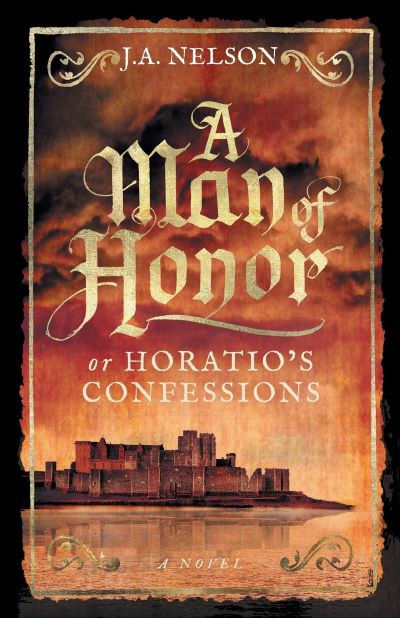
A Man of Honor Blog Tour and Review

  A Man of Honor, or Horatio's Confessions by J.A. Nelson Publication Date: December 9, 2019 Quill Point Press Paperback, eBook & ...