Friday, October 12, 2012

The Sister Queens - Blog Tour and Review


The Sister Queens by Sophie Perinot
Review copy provided by publicist
Synopsis:

Like most sisters, Marguerite and Eleanor were rivals.  They were also queens.

Raised at the court of their father, Raymond Berenger, Count of Provence, Marguerite and Eleanor are separated by royal marriages--but never truly parted.

Patient, perfect, and used to being first, Marguerite becomes Queen of France. But Louis IX is a religious zealot who denies himself the love and companionship his wife craves. Can she borrow enough of her sister's boldness to grasp her chance for happiness in a forbidden love?

Passionate, strong-willed, and stubborn, Eleanor becomes Queen of England. Henry III is a good man, but not a good king. Can Eleanor stop competing with her sister and value what she has, or will she let it slip away?

The Sister Queens is historical fiction at its most compelling, and is an unforgettable first novel.

My Take:
It has been a long time since I've read  an historical fiction novel. I used to read them all the time, but then for a while it seemed like they were all about the same people. The Sister Queens sounded a little different and I thought it would be fun to get back into the genre. I am happy to say that I was not disappointed. 

Sophie Perinot manages to bring the world of Marguerite and Eleanor to life with all the usual sibling rivalry, marriage issues, parenting worries, mother-in-law issues, plus the not-so-usual worries about marrying a better king than your sister, making sure your son keeps his land holdings, war, crusade, you know, all those royal concerns. 

I really love an historical novel that makes me rush to the computer to do a quick search on this or that person - which are real and which have been added to spice up the story. I was so thankful that the author detailed in the Author's Note at the end of the novel exactly what changes she made in the timeline (minor ones) and why. She also gave the sources for some of the more interesting and possibly controversial plot twists. I was quite impressed with her attention to detail. I have added The Life of Saint Louis to my kindle for future reading because it is listed as a source. Any novel that makes me want to do further research is a winner in my book. 

All the historical accuracy aside, I enjoyed The Sister Queens so much because Perinot brings both Marguerite and Eleanor out of the dry history books and makes them feel like the actual human beings they were in life with all their worries, fears, ambitions, competitiveness, loves, and problems that we, as readers, can relate to.  The reader gets to follow along on the sisters' journeys of marriage, parenthood, being queens, their changing relationship with each other and with their husbands. We get to see them become strong women each in her own way. 

I would strongly recommend The Sister Queens to anyone who enjoys historical fiction, history, romance and, actually, fiction in general. This story really pulled me in quickly and I stayed up late reading because I completely lost track of time. This is Sophie Perinot's first novel, which is a bit hard to believe, but I will be keeping my eye out for her next one. I hope there will be many more.

About Sophie Perinot

Sophie Perinot writes historical fiction. In Spring 2012 her debut novel, The Sister Queens, will be released by NAL. Set in 13th century France and England, The Sister Queens weaves the captivating story of medieval sisters, Marguerite and Eleanor of Provence, who both became queens – their lifelong friendship, their rivalry, and their reigns

Ms. Perinot has both a BA in History and a law degree. She left the law to pursue artistic interests, including writing. An avid reader, especially of classic literature, and life-long student of history, it seemed only natural that Sophie should write historical fiction. As someone who studied French abroad and a devotee of Alexandre Dumas, French history was a logical starting point. An active member of the Historical Novel Society, she has attended all of the group’s North American Conferences.

Active among the literary twitterati as @Lit_gal (a moniker she also uses at Agent Query Connect www.agentqueryconnect.com), Sophie is a regular contributor to the group writers' blog "From the Write Angle" http://www.fromthewriteangle.com/. Find her on facebook at www.facebook.com/sophie.perinot.author.
 
For more information, please visit Sophie Perinot's WEBSITE.
 The Sister Queens Virtual Book Tour Schedule 

Monday, October 8
Review at My Reading Room
Author Guest Post & Giveaway at In the Hammock Blog

Tuesday, October 9
Review at A Chick Who Reads

Thursday, October 11
Author Guest Post & Giveaway at A Chick Who Reads
Feature & Giveaway at So Many Precious Books, So Little Time

Friday, October 12
Review at A Book Geek

Monday, October 15
Review at Enchanted by Josephine

Tuesday, October 16
Author Interview & Giveaway at Enchanted by Josephine


Monday, October 8, 2012

Judging a Book by Its Lover

Judging a Book by Its Lover by Lauren Leto
review copy provided by Harper Perennial
Description from Goodreads:

Lauren Leto, humor blogger and co-author of Texts from Last Night, now offers a fascinating field guide to the hearts and minds of readers everywhere. Judging a Book by Its Lover is like a literary Sh*t My Dad Says--an unrelentingly witty and delightfully irreverent guide to the intricate world of passionate literary debate, at once skewering and celebrating great writers, from Dostoevsky to Ayn Rand to Jonathan Franzen, and all the people who read them. This provocative, smart, and addictively funny tome arose out of Leto's popular "book porn" blog posts, and it will delight and outrage literature fans, readers of Stuff White People Like and I Judge You When You Use Poor Grammar--people obsessed with literary culture and people fed up with literary culture--in equal measure.


My Take:
As someone who has been accused of being a literature snob on more than one occasion and who is blamed for causing our son to be a literature snob, I thought that Judging a Book by Its Lover would be a really fun book to read. I mean, we all judge others by the books they are reading, right? At least sometimes. I've mellowed a lot in my judgment of books and the people who read them. But there are times when someone says this or that book is their favorite book of all time and all I can think is "Really? Why?" And then proceed to try to figure out what about their personality makes them choose that book or was that the last book they read or was that just the only title they could think of?  Well, you get the picture. So, Judging a Book by Its Lover seemed to be something I would enjoy.

 I read this book in the spirit I think it was written. I had so much fun while reading it. I snickered, I laughed out loud, more that a few times I thought "Oh, that is totally true!" and I just generally had a good time while reading this book. I didn't agree with everything, but then again, I don't agree with lots of things. It is obvious than Lauren Leto is an avid reader and book lover. As a bookworm from my earliest memory, I could relate to so many of her anecdotes of bookworm-ness.

Looking back at the sections, I see that my favorite sections are in "Snark Bait". Am I surprised? Not really. Twitter-Sized Reviews of Memoirs was quite humorous. I think my favorite within Snark Bait was Book Critic's Bag of Tricks though. So funny. I have to agree with her admonition, "For the love of God, please use these words sparingly." If I see very many of these words in a review I can't help but think, "Pompous windbag." Maybe that's not fair, but there it is. 

I would highly recommend this book to book lovers without a qualm. The wider and deeper you have read, the more you'll get  out of it, though. I hate to quote too much from the book, because the discovery is half the fun. The sudden snort of derisive laughter at something you've thought but never written down much less actually said to someone is just priceless. 


Tuesday, September 25, 2012

The Whipping Club

The Whipping Club by Deborah Henry
review copy provided by T.S. Poetry Press via TLC Book Tours 
Description from Goodreads:
 Inspired by her heritage and research of the Irish Industrial School system, Henry’s auspicious debut chronicles a couple’s attempt to save their son from horrific institutions.

Marian McKeever and Ben Ellis are not typical young lovers in 1957 Dublin, Ireland; she’s Catholic and teaches at Zion School, and he’s Jewish and a budding journalist. The two plan to wed, but their families object to an interfaith marriage. And when Marian becomes pregnant, she doesn’t tell Ben. Coerced by Father Brennan (a Catholic priest who is also her uncle), Marian goes to Castleboro Mother Baby Home, an institution ruled by Sister Paulinas and Sister Agnes where “sins are purged” via abuse; i.e., pregnant girls are forced to mow the lawn by pulling grass on their hands and knees. Marian is told that her son, Adrian, will be adopted by an American family. The riveting storyline provides many surprises as it fast-forwards to 1967 where Marian and Ben are married and have a 10-year-old daughter. Marian’s painful secret emerges when she learns that her son was dumped in an abusive orphanage not far from her middle-class home and Sister Agnes is his legal guardian. Thus begins a labyrinthine journey through red tape as the couple fight to regain their firstborn child. Ultimately, 12-year-old Adrian is placed in the Surtane Industrial School for Boys, which is rife with brutality and sexual abuse at the hands of “Christian Brother Ryder.” Though unchecked church power abounds, this is not a religious stereotype or an indictment of faith. Hateful characters like Brother Ryder are balanced with compassionate ones, such as a timid nurse from the Mother Baby Home. Father Brennan deepens into a three-dimensional character who struggles to do what is right. Henry weaves multi layered themes of prejudice, corruption and redemption with an authentic voice and swift, seamless dialogue. Her prose is engaging, and light poetic touches add immediacy. For example, when Marian returned to Mother Baby Home after 11 years, she “opened the car door and stepped onto the gravel, wanting to quiet its crunch, like skeletons underneath her shoes.” Echoing the painful lessons of the Jewish Holocaust, Henry’s tale reveals what happens when good people remain silent.

A powerful saga of love and survival


My Take:

The Whipping Club is such an interesting and intriguing title for a book.  Although the reason for the title doesn't become clear until later in the book, the title alone does make the reader pause and maybe even dread what is to come in the story. It certainly doesn't sound pleasant. I do love a book where the title alone makes me curious and cautious.

There are so many things I loved about The Whipping Club but also so very many things happen in the book that made me angry, and as a mother myself, outraged, offended and generally just sad. The main characters are wonderful. I particularly like Marian with her modern attitude, her strength, her temper, her tendency to blurt out exactly what she thinks and then has to deal with the consequences.

I loved that Ben and Marian stayed together through so much turmoil and acted as a balance to each other. Ben is much more calm and diplomatic and tries to keep Marian on an even keel. But later in the novel they seem to switch roles just when Marian has used up all her fire and is starting to lose faith, Ben takes up the torch exactly when needed to keep up the fight to protect their son, Adrian.

Adrian just tore my heart out. He is so hurt and damaged by the institutional setting he has grown up in. I loved how his sister Johanna, who has just found out about this older brother, becomes a staunch supporter of Adrian and loves him no matter what.

Despite problems caused by Adrian's emotional issues resulting from horrible mistreatment, misunderstandings with neighbors, childhood antics, and even deliberate attempts to undermine the effort to bring Adrian home, this family stays firm in their love and loyalty to each other.

The various institutions that Marian and Adrian were subjected to are absolutely horrendous and the people who worked there just made me so very angry. As the story unfolds, so too, do the examples of how the abuse is a cycle that has repeated itself over generations. Some of the adults running the institutions are themselves victims of the same type of abuse. While it doesn't excuse their behavior, it does highlight some important issues that should be examined and addressed.

While some of the topics in The Whipping Club are far from pleasant, the Ellis family stands out as a beacon of hope and love and strength.  Even though the ending leaves it very much in doubt whether the family will be together and happy, I have hope. And, to be honest, I think the ending is perfect for this book.

There is one thing about The Whipping Club that just really stood out for me as a reader - I just loved the way that Deborah Henry gives us so many "intimate, inner thoughts of the characters"*. I felt like I really knew them and understood where they were coming from.

There are so many more things I would like to discuss, but I think that rather than give everything away, it would be better to simply say that I highly recommend this book. You will not regret reading it. It will make an impact on you.

When I finished the last page my reaction was just: Wow!

*quote from author via twitter conversation

About Deborah Henry

Deborah Henry attended American College in Paris and graduated cum laude from Boston University with a minor in French language and literature. She received her MFA at Fairfield University. She is an active member of The Academy of American Poets, a Board member of Cavankerry Press and a patron of the Irish Arts Center in New York.
Curious about the duality of her own Jewish/Irish heritage, Henry was inspired to examine the territory of interfaith marriage and in so doing was led to the subject of the Irish Industrial School system. She has traveled to Ireland where she has done extensive research and interviews, including those with Mary Raftery (States of Fear documentary filmmaker and co-author of Suffer the Little Children) and Mike Milotte (award-winning journalist), as well as first-hand reports from the survivors of the Magdalene Laundries, Mother Baby Homes, Orphanages and the Industrial Schools.
Her first short story was published by The Copperfield Review, was a historical fiction finalist for Solander Magazine of The Historical Novel Society and was longlisted in the 2009/10 Fish Short Story Prize.
The Whipping Club is her first novel. She lives in Fairfield, Connecticut with her husband and their three children. She is currently at work on her next book.

 Deborah Henry's Website


Monday, September 17, 2012

A Cupboard Full of Coats

A Cupboard Full of Coats by Yvvette Edwards
review copy provided by Amistad for TLC Book Tours
Description from Goodreads:

Shortlisted for the Commonwealth Prize

A "Kirkus" Best Book of the Year

Plagued by guilt, paralyzed by shame, Jinx has spent the years since her mother's death alone, estranged from her husband, withdrawn from her son, and entrenched in a childhood home filled with fierce and violent memories. When Lemon, an old family friend, appears unbidden at the door, he seduces Jinx with a heady mix of powerful storytelling and tender care. What follows is a tense and passionate weekend, as the two join forces to unravel the tragedy that binds them. Jinx has long carried the burden of the past; now, she must relive her mother's last days, confront her grief head-on, and speak the truth as only she knows it.

Expertly woven and perfectly paced, "A Cupboard Full of Coats" is both a heartbreaking family drama and a riveting mystery, with a cast of characters who linger in the mind and the heart long after the last page has been turned.


My Take:
I am so torn over this book. The writing is absolutely beautiful and the entire book is so wonderfully well written. I knew from the very first sentence - which makes up the entire first paragraph of the book - that I was going to love the writing:
It was early spring when Lemon arrived, while the crocuses in the front garden were flowering and before the daffodil buds had opened, the Friday evening of a long, slow February, and I had expected when I opened the front door to find an energy salesperson standing there, or a charity worker selling badges, or any one of a thousand random insignificant people whose existence meant nothing to me or to my world.

 The story unfolds so very gradually and the reader is able to put the pieces together as the characters of Jinx and Lemon are slowly revealed through this weekend they spend together. Both Jinx and Lemon feel that they are to blame for the death of - the murder of - Jinx's mother. Both have their story - the events as they each saw them. Both have wounds that have been buried but never forgotten, wounds that  have festered and prevented them from moving on. All of this is so slowly and painstakingly revealed through their discussions and storytelling. 

The events that are described are painful, sad, upsetting even, but so beautifully told. It was impossible to stop reading even though so much that happened made me angry and sad. Jinx feels betrayed and hurt and as a consequence of this short period of time in her past, she is unable to feel close to or relate to her own son. The tragedy of her mother's murder has haunted her throughout her life and threatens to derail her life completely. Although she doesn't know it yet, this weekend will be a turning point for the rest of her life.

One of the interesting aspects of the book is how much emphasis and importance was placed on food - the preparing, cooking, serving and eating of a meal. I don't know if it is a passion of the author's or if it is important within the culture Jinx grew up in, but the descriptions were amazing. One example:
I thought I had been creative about food in the past, ensuring a balance of texture and colour and nutrients, attractive to the eye, contrasting on the palate, on inspection, perfect in every respect. But everything he had cooked since his arrival had been divine. I could not recall any dish I had ever prepared that had in impact like this, that was such a dizzying, seductive, overwhelming experience that the more I ate, the more I wanted.

Even though the story is heart-breaking and disturbing on some levels, it does end with a surprising level of hope for Jinx's future. I'm not crazy about the nature of Lemon and Jinx's relationship from her youth, but this weekend they spend together as adults obviously enables her to work through the major emotional issues she has been harboring over the years. 

I really loved this book despite some of the disturbing and harmful things that happen within the story. This book really stayed with me.  I would find myself thinking about certain aspects of it at the oddest times. A Cupboard Full of Coats may be Yvvette Edwards' first novel, but I fully expect to read more of her writing in the future. She has such a way with the written word! You must read it for yourself.


 About Yvette Edwards

Yvvette Edwards has lived in London all her life. She currently resides in the East End and is married with three children. A Cupboard Full of Coats, her first novel, was longlisted for the Man Booker Prize.


Tuesday, September 11, 2012

The Midwife of Hope River

The Midwife of Hope River by Patricia Harman
review copy provided by William Morrow/Harper Collins
Description from Goodreads:
 A remarkable new voice in American fiction, creates an uplifting novel that celebrates the miracle of life.

A William Morrow Paperback Original
A debut novel featuring Patience Murphy, an Appalachian midwife in the 1930s struggling against disease, poverty, and prejudices-and her own haunting past-to bring new light, and life, into an otherwise cruel world

As a midwife working in the hardscrabble conditions of Appalachia during the Depression, Patience Murphy's only solace is her gift: the chance to escort mothers through the challenges of childbirth. Just beginning, she takes on the jobs no one else wants: those most in need-and least likely to pay. Patience is willing to do what it takes to fulfill her mentor's wishes, but starting a midwife practice means gaining trust, and Patience's secrets are too fragile to let anyone in.

A stirring piece of Americana, The Midwife of Hope River beats with authenticity as Patience faces seemingly insurmountable conditions: disease, poverty, and prejudices threaten at every turn. From the dangerous mines of West Virginia to the terrifying attentions of the Klu Klux Klan, Patience must strive to bring new light, and life, into an otherwise cruel world.


My Take:

The Midwife of Hope River begins on Black Tuesday, the day the stock market crashed, but Patience, the midwife for the area, has more pressing concerns on her mind. She is delivering a baby on her own. She has recently lost her mentor and friend, Mrs. Kelly, who she worked with as assistant midwife. The book begins with this difficult birth and sets the pattern for the rest of the book: Patience is called to help with a birth and afterwards she records the details in her journal. 

The reader gradually learns about Patience and her life before moving to her little house at the base of Hope Mountain. The story switches between the current storyline in Depression Era West Virginia and the events in the past that lead Patience to this small community. Patience has lived an exciting and sometimes surprising life.

There is so much about this book that I just loved. I loved the history and political climate of the era  the most. The story includes so many of the societal issues of the time: union organizing, mining dangers, race issues, women's health, socialists and anarchists, the KKK, even the origination of the eight hour work day. I loved the breadth of experiences that Patience had and how she learns and grows and changes her opinions about people and communities.

I loved how Patience seems to be a unifying element between the segregated communities of the community and still manages to cause and get into so much trouble as a result.

I also loved that even though Patience was always anxious to learn more about midwifery from the more experienced women, she wasn't afraid to follow her own instincts and do whatever made the new mother comfortable. She is pretty sassy and very smart and not afraid to speak her mind even in such a tumultuous time. 

The Midwife of Hope River is an entertaining, suspenseful, and educational book that I would highly recommend.You don't need to be a midwife or a home birth advocate to enjoy the book. The history alone would make it worthwhile, but the story is wonderful and I really like Patience and wouldn't mind reading more about her life.


Tuesday, August 28, 2012

The Roots of the Olive Tree

The Roots of the Olive Tree by Courtney Miller Santo
Review copy provided by Harper Collins via TLC Book Tours
Description from Goodreads:

Five generations of firstborn Keller women live in the same house on an olive grove in secluded northern California. Matriarch Anna is 112 and trying to be the oldest woman in the world-and succeeding heartily. Her daughter Bets, granddaughter Callie, great-granddaughter Deb, and great-great granddaughter Erin are also defying longevity norms. When a geneticist comes to study the women at the same time Erin announces she is pregnant with a firstborn boy, the Kellers′ roots are shaken wide open. Told in the third-person perspective of each of the women, the story and mystery of their existence is revealed in compulsive prose and compassionate drive.

My take:
Have you ever read a book where you thought, "I wish I knew these people. I want to talk to these people?" Well, I have and I want to know Anna from The Roots of the Olive Tree.  Anna is the matriarch of the Keller family and at 112 years old, she is still active both physically and mentally. I loved the way her life unfolded story by story. The reader is given the final product -- Anna at 112 years old - and she is such a great character. Feisty, wise, curious, Anna thinks she is set in her ways, but she is still interested in the world and in living. We are treated to small glimpses into her life - small pieces of the puzzle that come together to make the mature woman - which are interspersed within the current story. 

One of my favorite passages about Anna occurs pretty early in the book and, for me, set the tone for Anna for the remainder of the book:
All that the generations beneath her did not know worried Anna. She wanted to find someone who would listen to her. Really listen. The world hated old people. Even her own family thought they'd learned all they needed to know from Anna. She was no longer consulted, and she couldn't start a story without her daughter, or granddaughter, interrupting to finish it for her. They had no perspective, no understanding of how much still needed to be preserved. It would take a lifetime to tell them her secrets, and Anna had already lived two lifetimes. p.7
 Each generation of the Keller women is given her chance to tell her own life stories. Each woman is very different from the next, but they all have a strong family connection. A mother-daughter relationship may be strained, but the grandmother-granddaughter relationship fills any gaps. I loved the way this connection between generations is slowly developed so that the reader discovers the layers of relationship and understanding there is between these women.

This is a wonderful book about family, living life well, accepting people for who they are, loving, forgiving, adapting, continuing on. The common idea running through the story of living a long life and how that might be attained is fun, educational and inspirational. I don't know if there are any definite answers, but the story is wonderful and maybe just loving the life you live is an answer, but maybe not the answer.

The Roots of the Olive Tree is a book that I will be recommending to everyone who will listen to me. I loved the characters - especially Anna. I  also enjoyed reading about the olive trees, olive oil and all the lore surrounding them.

The thing I think I loved the most was the family story -  the family secrets that were kept, discovered, or revealed and the ordinary stories that became part of the family lore and ritual of bedtime stories.


About Courtney Miller Santo

Courtney Miller Santo grasped the importance of stories from listening to her great-grandmother, who lives in Northern California. She learned to write stories in the journalism program at Washington and Lee University and then discovered the limits of true stories working as a reporter in Virginia. She teaches creative writing at the University of Memphis, where she earned her MFA. Her work has appeared or is forthcoming in The Los Angeles ReviewIrreantumSunstone, and Segullah. She lives in Tennessee with her husband, two children, and dog. Her most prized possession is a photo of five generations of the women in her own family.

You can find Courtney Miller Santo's website here.


Thursday, August 23, 2012

The White Devil

The White Devil by Justin Evans
review copy provided by Harper
Description from Goodreads:
 Sex, Death, and Boarding School

When seventeen-year-old Andrew Taylor is transplanted from his American high school to a British boarding school--the English, hypertraditional, all-boys Harrow School--he finds his past mistakes following him, with an added element of horror: visions of a pale, white-haired boy from Harrow's past. Either Andrew is losing his mind, or the house legend about his dormitory being haunted is true.

When one of his schoolmates dies mysteriously of a severe pulmonary illness, Andrew is blamed and spurned by nearly all his peers. In his loneliness and isolation, Andrew becomes obsessed with Lord Byron's story and the poet's status not only as a literary genius and infamous seducer but also as a student at the very different Harrow of two centuries ago--a place rife with violence, squalor, incurable diseases, and tormented love affairs.

When frightening and tragic events from that long-ago past start to recur in Harrow's present, and Andrew's haunting begins to seem all too real, he is forced to solve a two-hundred-year-old mystery that threatens the lives of his friends and his teachers--and, most terrifyingly, his own.


My Take:
I must state first thing that any book that deals extensively with Lord Byron will definitely be on my To Read List. A ghost story that involves Lord Byron in any way will be at the top of my To Read List. So, naturally, The White Devil was a book I just had to read.

There were so many things about this book that worked for me and only a few that kind of bugged me. I really think that what bothered me the most was the fact that the so-called experts on Lord Byron in the book kept saying that he was a spoiled rich kid. He was never really what we would consider rich -- he had a title and was able to trade on that and his fame and amazing looks to borrow money, but he was not rich.  Right after reading the book, I would also have said that I didn't like the ending very much. But after some reflection, I have to admit that the ending does work especially within the context of a Gothic novel. I had to think back on some of Mary Shelley's more obscure novellas and remember how dark and unhappy the endings were. 

The White Devil is an amazing, dark, haunting story that stayed with me long after I had finished reading it. It has everything a story about an extremely old, haunted, exclusive British boarding school needs. The atmosphere of the school as described in the book is almost palpable. The emotions run high and the story is very fast paced. I read it in just a day or two.  

There are many quotes of Byron's poetry -- which I love -- and I think it really worked in the story. Andrew is supposed to be a Lord Byron look alike and he is to play Byron in the school play, so we get to watch him discover Byron's poetry and learn a lot more about Byron's life than he had ever anticipated. The research into Byron's life is due to trying to figure out what exactly is going on at the school. I thought the ghost story plot line worked pretty well in the novel. It wasn't really what I was expecting, but it did surprise me at first and I guess that is a good thing. I enjoyed the descriptions of the extensive research involved in solving the mystery and I especially loved the development and growth of poet/housemaster Piers Fawkes' character throughout the book. 

I was very happy to see that the author quotes from "Darkness", one of my favorite Byron poems in the novel.

I had a dream, which was not all a dream
The bright sun was extinguished, and the stars
Did wander darkling in the external space,
Rayless, and pathless, and the icy Earth
Swung blind and blackening in the moonless air;

(Now that Byron has you in his grasp, you'll have to do a quick search to read the rest of the poem.Go read some Bryon.)


Friday, August 3, 2012

Miss Me When I'm Gone


Miss Me When I'm Gone by Emily Arsenault
review copy provided by William Morrow/Harper Collins
Description from Goodreads:
MISS ME WHEN I'M GONE is the story of the sudden death of Eliza, the author of Tammyland, a "honky-tonk" Eat, Pray, Love, and Jamie, the friend who finds in Eliza's next, unpublished manuscript a mystery that could lead to a killer.

A William Morrow Paperback Original
A brand new mystery from the author of the critically acclaimed Broken Teaglass and In Search of the Rose Notes

Gretchen Waters is most famous for her book Tammyland-a "honky-tonk Eat, Pray, Love," a memoir about her divorce and her admiration for Tammy Wynette, Loretta Lynn, and Dolly Parton. When Gretchen dies falling on a set of stone steps outside of a library, everyone thinks it was an accident or a botched mugging. Jamie, Gretchen's best friend from college, certainly has no reason to suspect foul play. That is, until she becomes Gretchen's literary executor. Gretchen's latest manuscript is much darker than Tammyland-ostensibly about her favorite classic male country singers, it's really about a murder in her family that haunted her childhood. From beyond the grave, Gretchen's writing opens up a sinister new world, and suddenly, Gretchen's death seems suspicious-and then Jamie finds herself in danger as well..


My take:
I like a good mystery, and the premise of Miss Me When I'm Gone sounded really interesting.  But since I'm not really a fan of country music, I wasn't sure if I'd really like the book. While I'm not a fan of country music, I am very familiar with it - I did grow up in Oklahoma after all; so, I did know all the singers and the songs referenced and I had even seen many, if not all, of the specific performances discussed in the book. But, honestly, the country music subject didn't bother me -- it was really kind of fun and worked really well in this story.


I brought the book with me to the gym thinking I'd start it and if it didn't capture my interest, that was okay since I still got my workout. Well, the hour on the treadmill actually sped by and I just kept reading after I got home.  I was really caught up in the mystery - or mysteries. There are excerpts throughout the novel that are from the novel that Gretchen wrote as well as her research notes for her second novel that she didn't get to complete before she was killed. I found myself much more interested in the excerpts that were supposed to be from Tammyland, Gretchen's country-singer inspired book, than I thought I would be. The way author Emily Arsenault uses the Gretchen book and notes to help further her story was very well done and made the reading go quickly and I had fun gathering my own clues as I read the research notes and interviews. 


This is a mystery, obviously, but it is also a book about friendship, growing up, impending motherhood and a glimpse at how people and life can be so much more complicated that we might think. It is a very fast read and not too heavy. I read it in less than 24 hours because I just couldn't put it down. I would highly recommend this book.


Thursday, August 2, 2012

Charlotte Markham and the House of Darkling

Charlotte Markham and the House of Darkling by Michael Boccacino
review copy provided by William Morrow/Harper Collins
Description from Goodreads:

Debut novelist Michael Boccacino invites readers into the world beyond the realm of the living in Charlotte Markham and the House of Darkling, a Victorian gothic tale of the strange and supernatural. But all who enter this house must beware--for there is a price to pay for visitors who wish to save those they love. The story of a British governess and her young charges seduced by the otherworldly enticements of a mysterious mansion in the forest following the inexplicable death of the former nanny, this Tim Burton-like tale of dark fantasy is a bewitching treat for fans of horror and paranormal fiction, as well as readers who love creepy gothic tales and mysterious shadowy English manor houses. Not since Suzanna Clarke introduced Jonathan Strange to Mr. Norrell, and Neil Gaiman's Coraline crawled through a secret door into a twisted and sinister mirror world, has there been a journey as wondrously fantastic and terrifying as Charlotte Markham's adventures in the House of Darkling.

My take:
Charlotte Markham and the House of Darkling was just as deliciously creepy and wonderfully Gothic as the cover description and blurbs state. I enjoyed every dark, creepy, haunting minute of reading this book.This was such an interesting book. I found it to be very Victorian Gothic but not really a horror story, although there is much that is disturbing and kind of startling in this laced-up Victorian village.


I can't really even begin to try to explain the story -- it would give too much away and might ruin the discovery for the potential reader. There is a very otherworldly feel to the book that just pulled me into the story - much like Coraline or any movie by Tim Burton. The basic premise is that Charlotte Markham has lost her husband and has taken the position of governess for the young sons of the widower, Mr. Darrow. When their nanny dies under mysterious and violent circumstances, she takes on that role as well - and then during the process of helping the boys deal with this new loss, finds herself in a very strange situation between the real world and another, shadow world that is somehow influencing the real one in some very negative ways. Any more explanation would just ruin things.


Suffice it to say, if you enjoy dark, Gothic tales of  the Victorian variety, this would be a great choice. I really loved this book -- despite - or because of some of the very creepy, disturbing events and ideas in it. This would make a great read for October - to set the mood for the month.


Tuesday, July 31, 2012

The Thing About Thugs

The Thing About Thugs by Tabish Khair
ARC provided by the publisher through TLC Book Tours
Description from back cover of the book:
In a small Bihari village, Captain William T. Meadows finds just the man to further his phrenological research back home: Amir Ali, confessed member of the infamous Thugee cult. With tales of a murderous youth redeemed, Ali gains passage to England, his villainously shaped skull there to be studied. Only Ali knows just how embroidered his story is, so when a killer begins depriving London’s underclass of their heads, suspicion naturally falls on the “thug.” With help from fellow immigrants led by a shrewd Punjabi woman, Ali journeys deep into a hostile city in an attempt to save himself and end the gruesome murders.
Ranging from skull-lined mansions to underground tunnels concealing a ghostly people, The Thing about Thugs is a feat of imagination to rival Wilkie Collins or Michael Chabon. Short-listed for the 2010 Man Asian Literary Prize, this Victorian role reversal is a sly take on the post-colonial novel and marks the arrival of a compelling Indian novelist to North America.


My take:
The Thing About Thugs is such an interesting book on many different levels.The premise of the book is intriguing and has enough potential scandal to draw the reader in. But there is so much more to this book.  Tabish Khair, the author, uses more than one type of storytelling in the novel. There is first-person narration, third-person narration, personal letters, and newspaper articles - all used to tell the story from different perspectives and in some cases, different versions of the same story. Once I got the various voices straight in my own mind, I thoroughly enjoyed the transitions from voice to voice and really loved the different views of the characters, events, motivations, and the world presented in each different type of storytelling. I especially enjoyed the disparity between the excerpts from the writings of Captain Meadows and Amir Ali's version written in his personal letters.

The mystery of exactly who is killing the members of London's underclass is never a mystery to the reader, but the general public and the authorities jump to all the wrong conclusions in the matter. The way the elites reason and the complete wrongness of their beliefs is quite fun to read. The limited views held by many about class, race, gender, etc. are all dealt with in the novel. While I did enjoy Amir Ali and his quest to find the real murderer, I found that the character I was the most interested in was Qui Hy - an intriguing, mystery of a woman who is more capable than most of the well-educated, wealthy men of the city. I so want to read more about her and her Irish husband. Such great characters!

The Thing About Thugs is a beautifully written book. Khair is a wonderful writer with great skill in descriptive writing. I absolutely loved his many, beautiful descriptions of Victorian London throughout the book. To compare this book to Wilkie Collins is quite apt. The atmosphere is similar and I feel the book should be savored in much the same way as one would savor a Wilkie Collins novel. The book is only 244 pages long, but I read it as slowly as I could to savor the words -- until a certain point in the story and then I just couldn't stop reading until I had reached the end. I would highly recommend this book.


About Tabish Khair


Tabish Khair is an award-winning poet, journalist, critic, educator and novelist. A citizen of India, he lives in Denmark and teaches literature at Aarhus University.Here is his website.

Thank you to TLC Book Tours for the opportunity to read and review this book You can find the rest of the blog tour stops here.


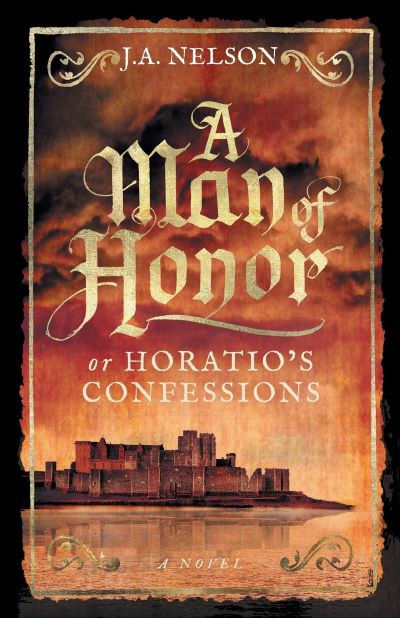
A Man of Honor Blog Tour and Review

  A Man of Honor, or Horatio's Confessions by J.A. Nelson Publication Date: December 9, 2019 Quill Point Press Paperback, eBook & ...