Showing posts with label guest post. Show all posts

Friday, October 31, 2014

Guest article by D.J. Donaldson on the Ebola situation

I have read and really enjoyed two of D.J. Donaldson's books: Louisiana Fever and Sleeping with the Crawfish., so when the opportunity to post a guest article about the current ebola situation was presented to me, I was happy to agree. I found his article to be very interesting, and informative. I hope you agree. 


~~~~~~~~~~~~~~~~~~~~~~~~~~~~~~~~~~~~~~~~~~~


Outbreak… Breakdown
A Forensic/Medical Author’s Take on Ebola and the CDC

My book, Louisiana Fever, involves the spread of a bleeding disease known as Crimean Congo hemorrhagic fever. This is a real disease that, like its close relative, Ebola, is caused by an infectious virus.  And having researched this thoroughly (and having come from a forensic/health background) I feel compelled to weigh in on the Ebola outbreak.

When I was plotting Louisiana Fever, I figured I ought to have a character in the book that was once an infectious disease specialist at the CDC.  It seemed like a logical idea because the CDC is this country’s unquestioned champion against virulent organisms, an organization staffed with experts that know every nuance of tropical viruses and how they can be controlled.

To make sure my writing about the CDC would have an authentic ring to it, I asked the public relations office of the CDC if I might be given a tour of the place.  “Sorry,” I was told.  “We don’t give tours.”  Considering how many dangerous viruses are stored in the various labs there, that seemed like a good policy, even to me.  So there would be no tour.  But then I heard from someone in my department at the U. of Tennessee Medical Center that one of our former graduate students now worked at the CDC.  I began to wonder if this connection might work to my advantage. 

And it certainly did.  The former student was now a virology section chief. A SECTION CHIEF…. Holy cow! This could be my way in.  But would the man be generous by nature and sympathetic to writers?  He proved to be both of those.

On the day of my visit, I reported to the security office as instructed.  There, I had to wait until my host came to escort me into the bowels of the place… no wandering around on my own with a visitor’s badge.  That day I saw the hot zone in action and spoke with experts in many fields of virology, even spent some time with the world expert on porcine retroviruses.  At the end of my visit—including all the cumbersome clinical protocols I had to engage in both before and during said visit—I not only left feeling more educated, but actually more safe and secure that no tropical virus would ever be a threat to this country… not with the meticulous, detail-oriented, security conscious, microbe fighters at the CDC watching out for us.      

So, it’s with much regret and… yes, even a little fear, that I witnessed the head of the CDC recently assuring us that the Ebola virus is very difficult to transmit and that we know exactly how to control it.  Instead of (what looked like) his clumsy attempts to soothe an ignorant and paranoid public, the CDC head should have given a blunt assessment, educated everyone like adults, and encouraged them to exercise precaution. Then, seemingly in answer, two nurses who cared for the index patient from Liberia become Ebola positive.  And the CDC clears one of those nurses to take a commercial airline flight, even though she was in the early stages of Ebola infection…depressing.  From a medical professional standpoint, this was practically criminal negligence. At present, the disease is not transmitted by air ("airborne"), but any scientist worth his/her salt cannot account for mutations the virus may undergo.  This is why the job of the CDC is to contain harmful microbes, issue protocols to protect the public against them and ultimately eradicate them... period.  It is not to be PR professionals for television cameras and fostering carelessness.

I’m still convinced that the combined knowledge and brainpower of the CDC staff will be a major impediment to any virus taking over this country.  But Ebola probably has some tricks we haven’t seen yet. That means we may lose a few more battles before we can declare that this particular threat is behind us.

Meanwhile, how is development of that Ebola vaccine coming?


D.J. Donaldson is a retired professor of Anatomy and Neurobiology at the University of Tennessee, Health Science Center—where he taught and published dozens of papers on wound-healing and other health issues.  He is the author of Louisiana Fever, one of the seven in the Andy Broussard/Kit Franklyn series of forensic mystery thrillers.

Louisiana Fever:  http://bit.ly/1u5ohGC

Tuesday, September 16, 2014

Guest Post by Alina García-Lapuerta, author of La Belle Creole

La Belle Creole by Alina Garcia-Lapuerta
Publication date: September 2014 by Chicago Review Press
Description:
Known for her beauty and angelic voice, Mercedes Santa Cruz y Montalvo, la Belle Créole, was a Cuban-born star of nineteenth-century Parisian society. She befriended aristocrats and artists alike, including Balzac, Baron de Rothschild, Rossini, and the opera diva La Malibran. A daughter of the creole aristocracy, Mercedes led a tumultuous life, leaving her native Havana as a teenager to join her mother in the heart of Madrid's elite society. As Napoleon swept Spain into the Peninsular War, Mercedes' family remained at the center of the storm, and her marriage to French general Christophe-Antoine Merlin tied her fortunes to France. Arriving in Paris in the aftermath of the French defeat, she re-created her life, ultimately hosting the city's premier musical salon. Acknowledged as one of the greatest amateur sopranos of her day, she nurtured artistic careers and daringly paved the way for well-born singers to publicly perform in lavish philanthropic concerts. Beyond her musical renown, Mercedes achieved fame as a writer. Her memoirs and travel writings introduced European audiences to nineteenth-century Cuban society and contributed to the debate over slavery. Scholars still quote her descriptions of Havana life and recognize her as Cuba's earliest female author. Mercedes epitomized an unusually modern life, straddling cultures and celebrated on both sides of the Atlantic. Her memoirs, travel writings, and very personal correspondence serve as the basis for this first-ever English-language account of the passionate and adventuresome Belle Créole.


Book Trailer:


~~~~~~~~~~~~~~~~~~~~~~~~~~~~~~~~~~~~~~~~~~~~
Author Guest Post:

Those who have seen the new book trailer for La Belle Créole have probably noticed the song performed throughout the video. A pianist plays at a grand piano while a soprano sings an emotional, Spanish-like song in a beautiful room in an early nineteenth-century house. The general idea is a recreation of a performance at Mercedes’ salon, but a few keen observers have asked me if this was Mercedes’ own composition. The answer is yes, it is Mercedes’ own work – one she most probably also sang. It has also been almost completely unknown for many years – possibly since her death in 1852.
The story of how we came to record it and hopefully launch it back into the world is one which owes much to many generous and talented people. It was also due to a bit of coincidence and luck.
Sometime last year, when I was still writing the manuscript and even pulling together sources, I found that two of Mercedes’ concert programs had miraculously survived and existed in the Museum of Music History. The programs were the ones she had printed for her private concerts – on her grand salonnights. I had never seen one – but in London I discovered that some long ago English guests had kept not one, but two, tucked away in their engagement diary cum scrapbook. The guardian of this gem was a former professor at the Royal College of Music and he agreed to let me review it there. Meeting him was pure serendipity – I learned so much about the Parisian musical scene from him. He was a living repository of information.
In the course of our conversation, I mentioned that in an old biography of Mercedes, there were some pages of music, seemingly her own composition. The biography contained no further information and I had never found any other reference to the little composition. The professor offered to play it for me so that I would know what it sounded like.
A week or so later, he came to my home and played it for me and my friend Nadine. Using her iPhone, Nadine recorded the event. It was a lovely piece – clearly inspired by traditional Spanish melodies – similar to those Mercedes had sung with her sister Pepita in Madrid. Even in Paris, Mercedes had often performed these Spanish songs – sometimes with castanets – to entertain her friends. A detailed description exists of one memorable evening, with Mercedes singing and dancing to an improvised Spanish song played by Chopin. Our professor pointed out it was a challenging piece for voice and added that Mercedes must certainly have been a talented singer.
While looking at the pages of music, I wondered out loud where or when it had first appeared. I must have looked at these pages countless times throughout the years – yet at that moment, the professor suddenly found the answer. The name was right there on the first page, almost blacked out for some reason, but still visible – yet I had never noticed it! It had appeared in the Correo de Ultramar, a Spanish language journal published in Paris. Something clicked in my brain. I had seen that name before – somewhere. But where? In letters from Cuba? Paris?
Googling soon found the name of the founder and publisher, and THAT name Mercedes had definitely mentioned in her correspondence. In fact, there was even a letter alluding to sending Air Espagnol to him. The year was 1843, in the middle of writing and publishing her famous La Havane and Viaje a la Habana. Where and when were solved. But I have never been able to answer how and why.
The probable date of that composition possibly makes Mercedes Cuba’s first published female composer.
The song stayed with me, but the manuscript had to be finished. Then edited. Still, I kept thinking that it would be wonderful to “resurrect” the song, hear it sung by a soprano, as Mercedes would have sung it, in a beautiful salon. I really envisioned it as the centerpiece to a book trailer… but this seemed a complicated goal. I would need a pianist, soprano, video and sound crew, venue and a video editor. Enter Nadine, once again full of inspiration and contacts. In a whirlwind of activity she recruited concert pianist Olga Jegunova who in turn found soprano Kirstin Sharpin. A crew was already recording Olga for a concert courtesy of the BBC and could also record our piece. The owners of the lovely home and hosts for the charitable concert graciously allowed it to serve as our backdrop, and a wonderful editor was found – recommended by the BBC gang. All was in place and the result was magical!
So here is the full performance of Merecdes’ work. Over 170 years since its composition, Mercedes’ bittersweet Air Espagnol, is lost no longer.

~~~~~~~~~~~~~~~~~~~~~~~~~~~~~~~~~


Corresponding link to the music (which for some reason won't embed correctly):  https://www.youtube.com/watch?v=MxLz4pt3tWI./


Author Biography
Alina García-Lapuerta
Born in Havana, Alina García-Lapuerta holds degrees in international economics from GeorgetownUniversity's School of Foreign Service and international relations from TuftsUniversity's Fletcher School of Law and Diplomacy and worked for a number of years in banking. Now based in London with her Spanish American husband and their two children, she spends considerable time in South Florida. She is a member of Biographers International Organization and the Biographers' Club.

Thursday, November 28, 2013

The Tenth Saint Blog Tour

The Tenth Saint by D.J. Niko
Publication date: January 25, 2012 by Medallion Press
Source: Publisher via Historical Fiction Virtual Book Tours
Synopsis:

Gold Medal Winner, Popular Fiction, 2013 Florida Book Awards.
Cambridge archaeologist Sarah Weston makes an unusual discovery in the ancient Ethiopian mountain kingdom of Aksum: a sealed tomb with inscriptions in an obscure dialect. Seeking to ascertain the translation and the identity of the entombed man, she and her colleague, American anthropologist Daniel Madigan, stumble upon a lethal conflict.
Tracking down clues in Addis Ababa and the monasteries of Lalibela, Sarah and Daniel uncover a codex in a subterranean library revealing a set of prophecies about Earth’s final hours written by a man hailed by Coptic mystics as Ethiopia’s tenth saint. Violently opposed by the corrupt director of antiquities at the Ethiopian Ministry of Culture and Tourism, they’re left for dead in the heart of the Simien Mountains. Surviving to journey to Paris, Sarah is given another piece of the ancient puzzle: a fourteenth-century letter describing catastrophic events leading to the planet’s demise.

Connecting the two discoveries, Sarah faces a deadly intercontinental conspiracy to keep the secret of the tenth saint buried. Risking her reputation and her life, Sarah embarks on a quest to stall the technological advances that will surely destroy the world.

********

I am happy to participate in the virtual book tour for The Tenth Saint by posting a guest post by the author including an excerpt from the novel. 

********
Thank you for the opportunity to contribute to your blog. Below is an excerpt from Chapter Seven of The Tenth Saint. It is a passage from the historical subplot which tells the story of Gabriel, a Western man who came to live with Bedouins in the Empty Quarter, in the fourth century CE, under mysterious circumstances. It is an interesting glimpse at Gabriel's inner turmoil, which is rooted in the dissonance between his own notions of man's supremacy on the planet and the Bedouins' commitment to living with the Earth's rhythms. This conflict is one of the central themes of the book, a contemplation that never quite gets resolved, as the answers are not so clear-cut. I hope you enjoy!
Gabriel was by nature an analytical man. What the nomads knew by instinct, he knew by mathematical exactitude. His mind dwelled in the realm of logic and order. On a steaming summer day, his logic told him a sandstorm might be approaching. He could tell this by the temperature of the air and ground and the direction from which the rare breezes came. When the air was bone-dry and so hot that breathing felt like a gasp for oxygen in a fire and the sand so hot it could not be traversed even by those with the most calloused feet, he knew, before the Bedouins themselves knew, what would happen: in nature’s inimitable way of attempting to achieve balance, the heat would distribute itself upward and outward by organizing convection currents. If the heat was intense enough and the currents strong enough, a fierce wind would be formed and move mass quantities of sand with no regard for anything or anyone in its way.
 Gabriel went to Hairan to relay his suspicions. He bowed his head in respect and pointed his eyes toward the ground. “Shaykh, it has not rained in months. The air is still and hotter than I have ever seen it. The camels are restless. I fear great walls of sand are coming.”
Hairan grimaced, the furrows in his forehead and around his eyes deepening till he looked ancient. He shot Gabriel a hard gaze, meant not to provoke but to challenge. “And how is it that a man who has never lived in the desert knows so much?”
Though he had been there almost a year, he was still considered a visitor. “I humble myself to your wisdom and that of your tribesmen. I do not know the desert like you do, but this I know. I am certain of it.”
“Abyan.” Hairan used the name Da’ud had given Gabriel. Everyone had adopted the epithet. “I believe you are sincere in what you say. But you have to respect the knowledge of the people who live and die by this desert.” In an apparent show of courtesy toward the visitor, he made an unusual concession. “I will call the council of elders together this evening. You may state your concerns before everyone. Then the elders will make a decision, and you must abide by that decision whether you agree with it or not.”
No sooner did Gabriel agree than he began to regret it. How could he possibly explain it to the elders? They spoke a different language, literally and figuratively. None of the ruminations of his mind would make sense to them. He couldn’t write down mathematical formulas, or explain concepts like the interaction between ground heat and the atmosphere. They looked at the weather like their ancestors always had: intuitively. They knew rain was coming when they saw the scarabs burrowing in the sand. They knew the weather would get cooler when birds started flying south in great numbers. And they knew sandstorms were coming when they saw smoke on the horizon.
***
There was no smoke this night. The sky was clear, its indigo cloak illuminated by a dazzling, perfectly round moon. The elders were gathered in the communal tent, smoking their pipes and recounting stories from the past when Gabriel entered.
The room fell silent.
He worried everyone already knew what he was about to say and, worse, had prejudged him. He shook off his momentary desire to make for the door and stood firmly before them.
Hairan addressed his tribesmen in the authoritative tone his rank demanded. “Abyan has something to say to us. Listen carefully. His is a warning. Warnings are never to be taken lightly.”
Gabriel spoke in a combination of Bedouin dialect and hand gestures. “Brothers, friends. I am but a stranger to these lands and bow to your wisdom. I claim no authority over this council, but I humbly ask you to heed what I am about to say. I have cause to suspect a great wall of sand is heading in our direction as soon as midday tomorrow. The people must prepare for this now.”
“You realize this is a grave matter. Why should we believe you?” one elder asked.
“Have you seen a vision?” asked another.
“No, no visions. Just fact. The desert is too hot. Even the animals feel it.” Gabriel struggled to disguise his frustration. “It will rise up and revolt to bring itself back to a balanced state.”
“Tomorrow we ride for the oasis,” said one of Hairan’s top lieutenants. “If we take cover as you are suggesting, we will miss our turn in the fertile lands. This would be devastating for our people and for the animals.”
“But not taking cover would be far worse. You could lose lives and property. It would be a major setback for the tribe.”
The elders whispered among themselves, clearly weighing both sides of the equation.
As the deliberations became more heated, Hairan clapped to call for quiet. He turned to Gabriel. “You must take your leave now. We will discuss this matter in private, and we will inform you of our decision. Please . . . go.”
With a sense of foreboding, Gabriel exited the tent. He had hoped that the elders would be more reasonable, that when faced with the prospect of death and destruction, they would choose the safe route even if doing so wasn’t convenient. Now he wasn’t so sure.
They seemed to be divided, clearly unconvinced a random white man could have any knowledge of things they had learned through the wisdom of their ancestors. His kind had no jurisdiction here.
When Hairan finally walked out of the tent, his old eyes screwed up, Gabriel could tell what the verdict was.
“I will lead the caravan to the oasis tomorrow. We have no supplies, no water. If we do not go, we will surely suffer the consequences.”
Gabriel clutched his unruly blond hair, now so long it dusted his shoulders. “This is madness. I can see what’s happening here. I am not one of you, so you summarily dismiss me. You would rather risk lives than believe a white man. Is that it?”
“This isn’t about you, Abyan. What I believe is that these people’s livelihood is at stake. Their very survival. I will not put them in the way of peril.”
“And yet peril is exactly what you will face.”
“We have been through countless sandstorms and survived. We are not afraid.”
He pointed at the chief, fully aware it was a sign of disrespect. “You are being foolish. You will regret this.”
“When I asked you to present your case to the council, I also said you had to accept their decision. It shows bad character to go back on your word.”
Gabriel looked away, insulted. Hairan might as well have slapped him.
Aware of the checkmate, the chief softened his tone. “All will be well. You will see.”
Gabriel did not reward him with a reply or even a look in the eye.
Hairan turned and walked to his tent.
Da’ud signaled to Gabriel to come sit with him and his cronies by the fire. Handing him a pipe of tobacco, the young man said, “You look pale, Abyan. What has happened to you?”
“I don’t belong here, my friend,” Gabriel said. “No matter how much I know or how I try to help, I will never be accepted. We both know that.”
“You are different from us. You do things a certain way, and we do them another way. That is not a bad thing.”
“Says who?”
“Our covenant. We believe no man is greater than another. Your knowledge and beliefs have a place in your society. We respect that. And you must respect our way of looking at the world.”
“You are too young to be talking like this.”
Da’ud laughed. “I’m not so young. I’m getting married before the next full moon. You will dance at my wedding, no?”
“You? Married?” Gabriel feigned shock. “Of course. I wouldn’t miss it. Besides, who else will pick you up when you drink too much of that camel-piss wine?”
Da’ud pointed to the pipe in Gabriel’s hand. “Or smoke too much of this camel dung.”
“Camel dung? That’s what I’ve been smoking all this time?” He took another puff. “Rather good.”

The two men laughed and shared a smoke. But even that lighthearted moment couldn’t lift Gabriel’s sense of dread. 

***************

About the Author

DD.J. Niko is the nom de plume of Daphne Nikolopoulos, an award-winning author and journalist. Her first novel, titled The Tenth Saint, was released in March 2012 to rave reviews by both readers and the trade. In March 2013, it was awarded the Gold Medal for popular fiction in the prestigious, juried Florida Book Awards. An archaeological thriller embroidered with historical motifs, The Tenth Saint takes readers on an adventure across the globe: Ethiopia, the Syro-Arabian Desert and Abyssinian Empire circa fourth century, London, Paris, Brussels, and Texas. The Tenth Saint is the first book in The Sarah Weston Chronicles series. The second, titled The Riddle of Solomon, releases July 1, 2013.
Daphne is now at work on a historical novel set in tenth century B.C.E. Israel. The epic story details the collapse of the United Monarchy and the glory and fall of the empire built by King Solomon. It will be released in early 2015.
As a former travel journalist, Daphne has traveled across the globe on assignment, or for personal discovery. She has been to some places most of us don’t realize are on the map, and she has brought them to life through her writing for various magazines, newspapers and websites on an international scale. Her travel background and rich experiences now bring authentic detail, color, and realism to her fiction.
She also is the editor in chief of Palm Beach Illustrated magazine, a 62-year-old luxury-lifestyle glossy. She also is the editorial director of Palm Beach Media Group, and in that capacity oversees 11 magazines and 3 websites.
She is the mother of twin toddlers and, in her spare time, volunteers for causes she believes in—literacy, education, child advocacy, and the advancement of traditional and tribal arts from around the world. Born in Athens, Greece, she now lives with her family in West Palm Beach, Florida.
For more information, please visit D.J. Niko’s website. You can also follow on Facebook, Twitter and Goodreads.


Virtual Book Tour Schedule

Wednesday, November 20
Review at Flashlight Commentary
Thursday, November 21
Interview at Flashlight Commentary
Friday, November 22
Guest Post at A Bookish Libraria
Monday, November 25
Review at Just One More Chapter
Wednesday, November 27
Review at The Lit Bitch
Review at Book Lovers Paradise
Thursday, November 28
Guest Post at A Book Geek
Monday, December 2
Review at Library of Alexandra
Tuesday, December 3
Review at For Winter Nights
Wednesday, December 4
Review & Giveaway at Peeking Between the Pages
Thursday, December 5
Interview at For Winter Nights
Friday, December 6
Review at Oh, for the Hook of a Book
Monday, December 10
Review & Giveaway at Luxury Reading


Tuesday, August 13, 2013

Guest Post by C.W. Gortner, the author of The Tudor Conspiracy


Mary Tudor: A Catholic Tudor Queen
An Original Essay by C.W. Gortner
Mary I of England is without doubt one of history’s most reviled and misunderstood figures—a queen who overcame tremendous odds to win her throne in 1553 yet who managed by her death in 1558 to have deeply divided her realm, responsible for a savage persecution that terrorized her realm. She ruled only five years but so terrible is the memory of her deeds that she has earned the sobriquet of “Bloody Mary”, a name for which she is still known today.

Mary was the sole surviving child of Henry VIII and his first wife, Catherine of Aragon, daughter of the Catholic Monarchs of Spain. Catherine was sent to England to marry the Tudor heir, Prince Arthur, but his sudden demise left her a widow. Catherine claimed the marriage had never been consummated, and her impoverished isolation in the years that followed stoked the ardor of the new heir, Henry, who, upon his coronation, wed Catherine despite a six-year difference in their ages. Catherine and Henry were married for twenty-four years; stalwart and devout, indubitably in love with her husband, Catherine endured numerous miscarriages and the death of an infant son before finally giving birth to Mary in February of 1516.
As Henry’s sole heir (for despite his later obsessive quest for a son, a daughter could inherit his crown) Mary was adored by her parents. Historical sources recount numerous occasions when the handsome king displayed his fair-haired daughter to his court, showing off her skill with music and graceful charm. But Henry’s disillusion with his aging, now-barren wife catapulted him into a tumultuous affair with one of Catherine’s ladies in waiting, the ambitious Anne Boleyn, who would settle for nothing less than marriage. Thus, at the age of fifteen, Mary’s entire world was turned upside down, her status yanked out from under her as she watched her mother, clinging to her title and rights, exiled to a remote manor, where Catherine died in appalling conditions and in fear for the safety of the daughter she’d been forbidden to see. Anne Boleyn also vented her spleen, forcing Mary to serve Anne’s infant daughter by Henry, Princess Elizabeth, and even, sources claim, plotting to have Mary killed. The cataclysm unleashed by Henry’s passion for Anne changed England forever, resulting in a nascent reformation that would in time make Protestantism the official faith, even as Anne waged desperate battle to protect herself and her child. In 1536, Anne lost her battle and was executed on trumped-up charges; within weeks Elizabeth joined her half-sister Mary as a bastard daughter of the king.

Mary’s struggles continued while Henry married four more times. Steadfast in her Catholicism, the faith in which she’d been reared and which her mother had exhorted her to uphold, she finally gave into her father’s demands to acknowledge him as Head of the Church—an act that haunted her for the rest of her life, as she felt she’d betrayed her mother’s trust and her own belief that the only true church was the Catholic one. In those years, she developed an often uneasy relationship with her half-siblings, Elizabeth and their brother Edward, born of Henry’s third wife, both of whom had imbued the radical spirit of the Reformation.

Various suitors for Mary’s hand came and went; at the age of thirty-seven, when many women were considered unmarriageable, she found herself in the hunter’s snare once more when John Dudley, Duke of Northumberland, usurped her claim to the throne upon Edward VI’s death and set his daughter-in-law, Jane Grey, in her place. Often neglected and ignored, prematurely aged by self-imposed seclusion, Mary displayed her innate Tudor ferocity, eluding her pursuers to amass an army and march on London. She may have been a Catholic spinster but the people cheered her as the rightful queen and rallied to her cause. She was crowned in the summer of 1553, sending Jane Grey, Northumberland and his sons to the Tower. Many of the new queen’s advisors, including the wily Imperial ambassador, Renard, urged Mary to execute her prisoners but she consented only to Northumberland’s death, promising release in time for Jane and the Dudley sons. Even in questions of religion she expressed caution, citing her people’s hearts could only be won back in stages. Nevertheless, one of her first acts was to overturn the annulment of her mother’s marriage to Henry VIII, casting further doubt on Elizabeth’s legitimacy.

The advent of her marriage to Philip of Spain, son of the Hapsburg emperor and Mary’s cousin, Charles V, who had long been a scion of support, if not actual assistance, changed everything. Suddenly, Mary saw the possibility of happiness bloom before her: the chance to be love and be loved, to become a wife and mother. As Renard pressured her to deal with all remaining threats to her faith and crown, including Elizabeth, whom he believed was the active figurehead of Protestant opposition, the deep-seated wounds inflicted on Mary since adolescence flared anew. She remembered her hatred of Anne Boleyn, her helpless horror over her father’s zeal to amass the Church’s wealth and abolish its power, her heartrending sorrow at the separation from, and death of, her mother, and the long years of humiliation. The past could be absolved, she believed. Everything that had gone wrong could be put to right, if only she roused the strength that Catherine of Aragon had shown; the unstinting fervor that her maternal grandmother, Queen Isabella, had employed to unite Spain. She saw herself as a savior, who must do whatever was required to bring about her people’s return to the Catholic fold.

Caught in a maelstrom of her own convictions, Mary precipitated her tragedy. 
It is too simple to condemn her as a monster, though she behaved in a monstrous way. Her execution of Jane Grey and subsequent burning of over two hundred Protestants, among who were Cranmer, archbishop of Canterbury, and Bishops Ridley and Latimer, blackened her name and left her country in chaos, the smoke of the pyres only clearing once she took to her deathbed after a false pregnancy that may have been uterine cancer. She left behind a realm ravaged by political and religious dissension, widespread famine and penury. The loss of England’s last possession in France, the city of Calais, was a blow Mary declared would be found engraved on her heart. Even in her final hours, she was beset by those who implored her to condemn Elizabeth—an act she refused. In doing so, Mary unwittingly accomplished in death what she had failed to do in life: She gave England back its hope, in the form of a virgin queen, whose unparalleled grandeur and longevity would define an era.


Monday, March 11, 2013

Guest Post by Simon Acland, author of The Waste Land


THE GRAIL LEGEND IN MEDIEVAL AND MODERN FICTION
By Simon Acland, author of The Waste Land
The opening conceit of my novel The Waste Land is that a group of desperate Oxford dons discover an ancient manuscript in their library. They resolve to rescue the finances of their bankrupt college by turning this manuscript into a best-selling thriller (think The Da Vinci Code). The manuscript contains the autobiographical story of Hugh de Verdon, a monk turned knight who goes on the First Crusade (1096-99) and “discovers the truth about the Holy Grail”. What is more, the manuscript appears to be the Urtext, the original source material, for the very first medieval Grail romance written by Chrétien de Troyes around 1180.

I studied French and German at Oxford in the 1970s. Back then, Oxford was more than a little old-fashioned, and I found myself studying 12th and 13th Century Grail Romances as my special subject (that is Modern Languages at Oxford for you). However, I found them fascinating and became a fully signed-up Holy Grail geek. Later I read with amusement the books which adapted the medieval legends – The Holy Blood and the Holy Grail by Baigent, Leigh and Lincoln, which caused a storm in 1982 by suggesting that the Holy Grail – the San Graal in medieval French – was actually a cipher for the royal blood line of Jesus Christ – the Sang Real in modern French. This was the central idea which was then taken into The Da Vinci Code by Dan Brown. Not for nothing is Dan Brown’s villain called Sir Leigh Teabing.

My novel The Waste Land jokes that it all started with Hugh de Verdon’s story, but, in fact, it of course started with that fellow Chrétien de Troyes. Little is known about him, even though he was the Dan Brown of his day. He wrote several very popular chansons de geste, long poems with Arthurian themes about chivalry and damsels in distress, which in places were funny, and for medieval times, even erotic. Chrétien’s last work is called the Roman de Perceval.

In the Roman de Perceval, the knight of the title finds himself in a mysterious castle, and witnesses a strange procession, the centerpiece of which is a magical golden grail (in medieval French graal is a somewhat obscure word meaning a large serving dish, on which you might place a boar’s head or large salmon). Later on in the poem it transpires that the grail is used to feed and keep alive a wounded king, and it is at one point described as ‘tante sainte chose’ (‘such a holy thing’), but it is not linked specifically with Jesus Christ in any way. The land of this king (who happens to be Perceval’s uncle) is barren, laid waste, and Perceval missed the opportunity to lift the spell by asking questions of his host about the grail. The grail appears to be a cornucopia linked with Celtic legend more than a Christian object but it is never fully explained. So a great mystery is set up – what is the grail, why is the king wounded, what happens when the quest is fulfilled and the spell is lifted?

But Chrétien died before he could finish the story, leaving these questions unanswered. Imagine if Dan Brown had died before finishing The Da Vinci Code.

Such was Chrétien de Troyes’ popularity that several writers soon attempted to complete his story. The first of these to make a connection between the Grail and the vessel used by Jesus Christ at the Last Supper and to catch Jesus’ blood when he was taken down from the Cross was Robert de Boron. This version contains many of the familiar elements of the legend - Joseph of Arimathea, Merlin, King Arthur, the questing knights – but it too was followed by other medieval versions which adapted the story to the individual interests of the writers. One version, Parzival by Wolfram von Eschenbach, introduced a loose connection with the Templars. Then, with the passing of the Middle Ages and of the interest in questing knights, the Grail fades from view. It isn’t really until the rekindling of interest in things gothic in the 19th Century that the Grail reappears as a cultural theme in Wagner’s opera Parsifal and the paintings of the pre-Raphaelites.

Sir James Frazer’s massive twelve-volume study of anthropology and folklore, The Golden Bough, published from 1890 to 1915, rekindled 20th century interest in ancient myth and legend.  In 1919 Jessie Weston focussed in on the Grail myth in her influential work From Ritual to Romance, and tied its origins firmly back to Celtic fertility legends. Three years later TS Eliot seized on the imagery of the Grail for his poem The Waste Land. Eliot acknowledges his debt to both these writers in the controversial notes to his great poem. In my turn, in homage, I have seized on Eliot’s title for my book, used snippets of his poem for my chapter headings, and buried 23 direct quotations in my text for eagle-eyed Eliot enthusiasts.

There was a trickle of Holy Grail books through the mid-20th Century, and some films, not least Monty Python and the Holy Grail (to which I have also paid a sort of homage by dressing up in Monty Pythones-que Crusader costume to do video interviews about my book).  You can watch the video here: http://www.meettheauthor.co.uk/bookbites/1915.html

 But it wasn’t really until the 1982 success of The Holy Blood and the Holy Grail spawned a flood of imitation pseudo-histories and a torrent of similar fiction that the floodgates really opened. Given the size of the genre, I am not sure that I should have added to it, but I hope that you enjoy reading my lesser Waste Land if you have a chance to do so. For all its proud pedigree, it is a simple adventure story about a knight who falls in love and loses his beliefs, and firmly, as its sub-title suggests, intended as an Entertainment.

Simon Acland worked as a venture capitalist for over 20 years and wrote several books on investing and leadership. The Waste Land is his first novel. For more information, visit his website at :http://www.simonacland.com/wasteland.htm


Friday, December 21, 2012

Guest Post by Tony Viardo, CEO of the publisher Astor + Blue Editions


Kindle   B&N  kobo sony

Awhile back I posted an excerpt from Extraordinary Rendition by Paul Batista. The publisher of that book and many other wonderful books is Astor + Blue. Right now, Astor + Blue is having a Holiday Season Price Promo for Extraordinary Rendition for only $1.99. In fact, Astor +Blue Editions has put its entire first season’s list of e-book titles on a holiday promotional sale for $0.99 or $1.99The sale will continue through January 7, 2013. This is a great deal and if the excerpt from Extraordinary Rendition peaked your interest, now is a great time to get it. Who doesn't like a holiday sale? Their whole can be found here: http://astorandblue.com/catalog/.


As a bonus treat, here is a guest post by the CEO of Astor + Blue, Tony Viardo. Enjoy.

- - - - - - - - - - - - - - - - - - - - - - - - - - - - - - - - - - - - - - - - - - - - - - - - - - - - - - - - - - - - - - - - - - - - - - - - - - - - - - - - - -

Digital Publishing: The Grinch Who Stole Christmas?

So how many articles have we read about E-books and Digital Publishing this year? For anyone who generally follows the book world (rabid booklover, book-blogger, industry pro or casual reader), we’re literally inundated with the amazing numbers—“E-book sales up 125% (again) over the 175% they were up from last year’s 225% increase!”—and equally amazing technological announcements—“Next Fall, the new ZimWittyZoomDitty tablet not only updates your Facebook and Goodreads friends whenever you snort in disgust … it cooks dinner for you at the same time!”

This leads many to take at least casual stock of what’s going on/going to happen to the “Publishing World” as we know it.  And if your friends are like my friends (hardcore print book consumers), that stock is usually pretty morbid (sharp Greenwich Village angst not included): “Print books are doomed, so are brick-and-mortar stores.  Goodbye literary quality. Oh and some pajama-wearing techie living in a basement with a laptop is going to be the new Sulzburger; we’ll all have to bow down!”

If you (or that good friend of yours) fall into the mortified category, my take (for what it’s worth) may come as positive news:  E-books are not, and will not be, the Grinch Who Stole Christmas; in this case, the “Print World’s” bacon. Now, as the owner of a “Digital First” publishing house (Astor + Blue Editions, www.astorandblue.com) my opinions may easily be written off as self-serving and invalid.  But bear with me for a minute… these are fact-based observations and I might just make sense (Someone tell my mom and dad).

As someone who earns a living from publishing, I have to follow numbers and industry trends as closely as possible.  And while some see doom and gloom for Print, I see exciting developments for both Print and E-book formats.  What do the numbers show?  Digital book revenue is skyrocketing, print revenue is declining.  Natural conclusion?  E-books are killing print books. But not so fast.  Historically, Print revenue has always seemed to be declining (even before E-books were invented), but that doesn’t mean the book market is dying or shrinking.

We have to remember that in fact the book market is growing. Readership always grows because population always grows.  Every year, new readers enter the vast pool of the club that is “adult readership,” (despite Dancing with the Stars). And every year more readers are being born and theoretically being inspired by Ms. Crabtree’s elementary reading class.  **So why the decline?  Readership grows gradually, but the sheer number of books and book vendors grow exponentially, showing an investment loss almost every year. (Basic statistics: the widening universe makes it look like a shrinking pie when it isn’t).

So what does this mean?  If you look at the numbers (historically), revenue for print books may have declined, yes, but not more than “normal,” and not significantly more than it did when there were no E-books around. (This is arguable of course, but the long term numbers do not show a precipitous drop-off). The yearly revenue decline, if there is one, can just as easily be written off to economic conditions as to E-book competition.  Bottom line:  Any drop in print revenue that may be caused by E-books are not significantly sharp enough to declare that E-books are destroying print book sales.  (Hence no Grinch).

What may be happening, and what I believe is happening is that a whole new market for E-books is developing, while the print book market growth, like Publishing as a whole, is still growing at a historically gradual pace. (Boringly flat).  Come up with your pet anecdote here, but I believe that more new readers are entering the market (who otherwise wouldn’t have) because of E-readers; existing readers are consuming more books (both print and e-book) than they did before; and while it would seem that a certain print title is losing a sale whenever readers buy it in E-book format, this is offset, at least somewhat, by the fact that more print titles are being bought (that otherwise wouldn’t) because of the extra marketing buzz and added awareness produced by the E-book’s cyber presence.  All of it evens out in the end, and I believe, ultimately fosters growth industry-wide.

So take heart Print fans, E-books are not the dark villain you think they are.  And here, I should correct my earlier analogy—that E-books are not the Grinch Who Stole Christmas.  They may actually be the Grinch…in as much as, at the end of the story, the pear-shaped green guy ended up not only giving all the presents back to the singing Who-villers, he created a flash mob and started a big party as well.


A Man of Honor Blog Tour and Review

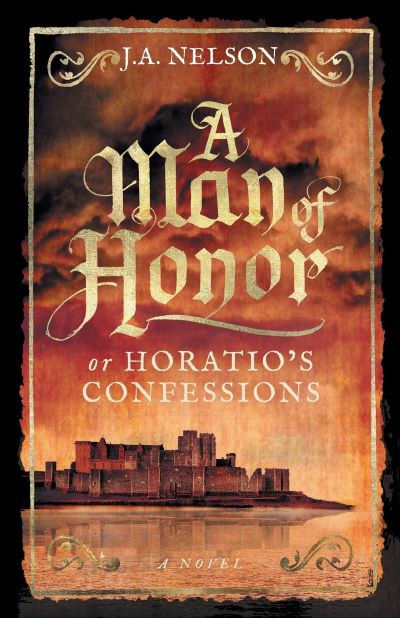
  A Man of Honor, or Horatio's Confessions by J.A. Nelson Publication Date: December 9, 2019 Quill Point Press Paperback, eBook & ...